
"I already tried PRP, it didn't work for me." I hear this often, usually from a patient who has understandably lost faith in the entire treatment — when, on closer questioning, what actually failed was one particular preparation of PRP, done one particular way, at one particular clinic. This is one of the most important — and most under-discussed — truths in regenerative pain medicine: PRP is not one standardised product. It is a range. And where any individual injection falls on that range depends on decisions made long before the needle ever touches your skin.
No, all PRP injections are not the same. The quality of PRP — and therefore how well it works — depends on the equipment used to process it, how your blood is collected, the final platelet concentration achieved, whether white blood cells are included or removed, how (and whether) the plasma is activated, the physician's understanding of the biology, and whether the injection is placed precisely using ultrasound guidance. Two people with an identical diagnosis can get very different results from "the same" treatment, simply because the PRP itself — and the way it was given — was different.
What Is PRP, in Plain Terms?
Platelet-Rich Plasma (PRP) is made from your own blood. A small sample is drawn, spun in a centrifuge to separate its components, and the platelet-rich layer — concentrated with your body's own growth factors — is drawn off and injected back into the injured or degenerated tissue. In plain terms: platelets are best known for clotting blood, but they are also tiny factories of healing signals. PRP takes your own healing signals, concentrates them, and delivers them precisely where the tissue needs help — whether that's an arthritic knee, a torn rotator cuff, a tennis elbow, or a lax spinal ligament.
Because it comes from your own body, there is no risk of allergic reaction or rejection. That part is genuinely simple and safe. What is not simple — and what most patients are never told — is that "PRP" is a broad category, not a single fixed formula.
So, Are All PRP Injections the Same? The Honest Answer
No. This surprises most patients, and honestly, it surprises some doctors too. PRP is not regulated or dispensed like a fixed-dose medication where 500mg of a drug is 500mg everywhere. Every step of preparing and delivering PRP involves a choice — and each choice changes what actually ends up in the syringe. Two clinics can both correctly call their product "PRP," and yet one may contain three times the platelet concentration of the other, with a completely different white cell content, injected with completely different accuracy. This is why the same condition, treated with "the same treatment" on paper, can produce very different real-world results.
What Actually Determines PRP Quality
Let's go through this properly — factor by factor — because understanding this is what lets you evaluate any PRP treatment you're offered, anywhere.
1. The Equipment Used to Process Your Blood
PRP is prepared using a centrifuge and a preparation kit or tube system. These range from validated, certified double-spin systems designed specifically for orthobiologic use, to basic single-spin kits, to — in some informal setups — improvised equipment never designed or tested for this purpose. In plain terms: think of it like separating cream from milk. A properly designed system separates the platelet layer cleanly, with minimal contamination from red blood cells (which can be pro-inflammatory) and unwanted debris. A poorly designed or incorrectly used system leaves you with a murkier, less concentrated, less consistent product — even though the label on the tube still says "PRP."
2. How Your Blood Is Collected
This sounds trivial, but it isn't. The needle gauge used to draw blood, the anticoagulant in the collection tube, how gently the sample is handled, and how quickly it is processed all affect whether platelets stay healthy and functional, or become damaged ("activated" too early or ruptured) before they ever reach your joint. Rough handling or delayed processing can quietly degrade a sample that started out perfectly good.
3. Platelet Count and Concentration — the Numbers That Matter
This is the single most important, most measurable factor — and the one most often skipped. PRP works by concentrating your platelets to several times your normal baseline blood level, generally cited in orthobiologic literature as roughly 3 to 8 times baseline for a therapeutic effect. In plain terms: if the final concentration is too low, you are essentially injecting a diluted product that doesn't deliver enough growth factor signal to meaningfully help the tissue — patients describe this honestly as "it felt like a saline shot." If the concentration is inappropriately high, particularly when combined with a high white blood cell load, it can sometimes provoke more local inflammation than intended. Responsible PRP preparation involves measuring this — not guessing.
4. Leukocyte-Rich vs Leukocyte-Poor PRP
PRP can be prepared with more white blood cells (leukocyte-rich, LR-PRP) or with most white cells removed (leukocyte-poor, LP-PRP). Orthopaedic and pain literature — including classification frameworks such as the PAW system (Platelets, Activation, White cells) — recognise these as genuinely different products with different ideal uses. In plain terms: leukocyte-rich PRP is generally favoured for tendon problems, where a controlled inflammatory response can help remodel stubborn, poorly-healing tissue. Leukocyte-poor PRP is often preferred inside a joint such as the knee, where excess white cells can sometimes irritate the joint lining (synovium). Using the wrong type for the wrong tissue is a quiet, common reason PRP under-performs.
5. Whether and How the PRP Is Activated
Some protocols activate the platelets (commonly using calcium chloride or thrombin) before injection to trigger immediate growth factor release; others rely on the platelets activating naturally once they contact your tissue's own collagen. Both approaches are used in legitimate practice, but they behave differently, and the choice should be intentional — based on the condition being treated — not arbitrary.
6. The Doctor's Understanding of the Processing — Not Just the Kit
This is the factor patients think about least, and it may be the most important of all. A preparation kit is a tool; it doesn't make clinical decisions. Does the physician actually know your baseline platelet count? Do they know what concentration they achieved in your specific sample? Do they adjust the protocol — leukocyte content, activation, volume, number of sessions — to your specific diagnosis, disease stage and tissue type, or is every patient given an identical, generic injection regardless of what's actually wrong with them? A physician who understands the biology treats PRP as a precise pharmacological tool tailored to you. A clinic that treats it as a generic "wellness injection" is offering something quite different, even if the paperwork looks the same.
7. Injection Technique — Ultrasound-Guided vs "Blind" Injection
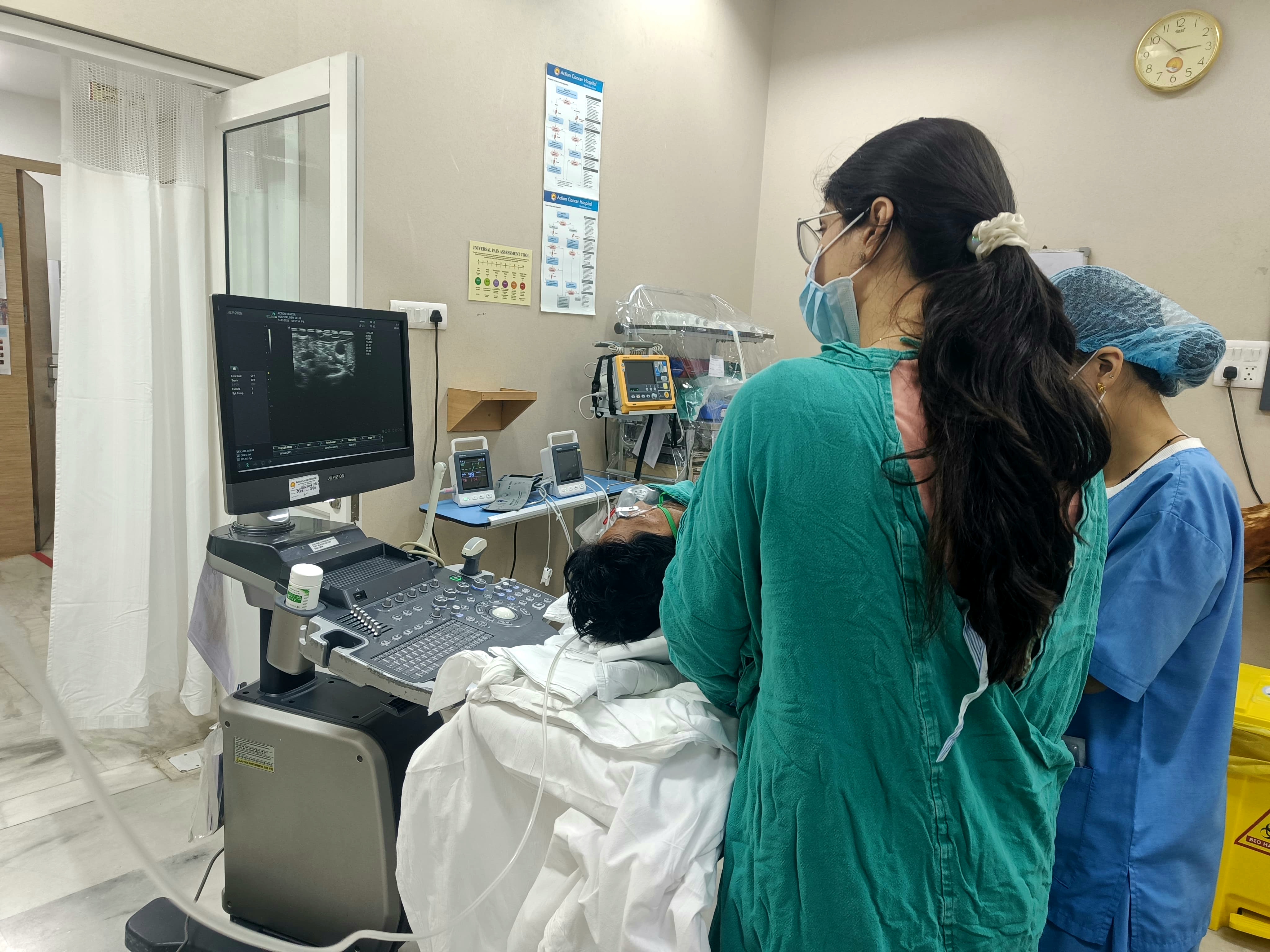
Even perfect PRP fails if it isn't placed correctly. A "blind" injection — based purely on surface landmarks and feel — can miss the exact target by a meaningful margin, especially in a joint with swelling, scarring from previous injections, or unusual anatomy. Ultrasound-guided injection lets the physician see the needle tip and the target tissue — the joint space, the tendon sheath, the specific ligament — in real time, and confirm the PRP is delivered exactly where it needs to be, not into surrounding fat or muscle where it can do very little. This single factor — accuracy of placement — is one of the most under-appreciated reasons the same PRP "recipe" can succeed at one clinic and disappoint at another.
8. The Stage of Your Disease
PRP supports healing; it does not manufacture new joint cartilage or reattach a completely torn tendon from scratch. It works best in early to moderate degeneration or injury, where living, responsive tissue is still present to receive the growth factor signal. In advanced, bone-on-bone osteoarthritis, or a full-thickness tendon tear, even perfectly prepared PRP has a genuinely limited role — and any clinic implying otherwise, in any condition, at any stage, is overselling. The disease stage isn't a detail; it's often the deciding factor in whether PRP was ever going to work, independent of how well it was prepared.
9. What Happens After the Injection — Rehabilitation
PRP starts a biological repair process; it doesn't finish it alone. Structured rehabilitation and physiotherapy after the injection — appropriate loading, strengthening, and activity modification — meaningfully affects how well the treated tissue actually remodels and how durable your relief is. A single injection with no follow-up plan is a missed opportunity, however good the PRP itself was.
Good PRP is a measured, targeted, individualised medical procedure — not a fixed product you either "get" or "don't get." The equipment, the blood draw, the platelet count, the cell content, the physician's judgement, the precision of the injection, and your disease stage all combine to determine whether PRP genuinely helps you.
Good Quality PRP vs Poor Quality PRP — Side by Side
Use this as a practical checklist for evaluating any PRP treatment, at any clinic:
| Factor | Good Quality PRP | Poor Quality PRP |
|---|---|---|
| Equipment | Validated, certified double-spin or purpose-built system | Improvised or uncertified equipment |
| Platelet concentration | Measured, typically ~3–8× your baseline | Unmeasured, "eyeballed" or unknown |
| Leukocyte content | Matched to the condition (joint vs tendon) | Same generic mix for every condition |
| Blood handling | Careful draw, prompt, gentle processing | Rough handling, delayed processing |
| Injection technique | Ultrasound-guided, precise placement | "Blind" landmark-based injection |
| Protocol | Individualised to diagnosis & disease stage | One identical injection for everyone |
| After-care | Structured rehabilitation plan included | Injection given with no follow-up plan |
| Expectations set | Honest — early/moderate disease, realistic timeline | Overpromised as a cure for any stage |
Why the Same Condition Can Get Different Results at Different Clinics
Put the factors above together and the pattern becomes obvious: "PRP for knee osteoarthritis" is not a single, fixed intervention — it's a spectrum of possible preparations and techniques, all sharing one name. A patient who receives a well-measured, ultrasound-guided injection of appropriately concentrated, condition-matched PRP, paired with rehabilitation, is receiving a genuinely different treatment from a patient who receives an unmeasured, blindly-injected sample from generic equipment with no follow-up plan — even though both were told, correctly, that they "got PRP." This is precisely why patient experiences with PRP vary so much, and why one disappointing experience shouldn't be generalised to "PRP doesn't work." The right question isn't "does PRP work?" — it's "was this PRP, given this way, ever likely to work for my condition?"
The PRP Quality Checklist — Questions Worth Asking Before You Say Yes
Before your PRP injection, ask
- What equipment/system is used to prepare the PRP, and is it a certified medical device?
- Will my platelet concentration actually be measured, or estimated?
- Is the PRP leukocyte-rich or leukocyte-poor, and is that matched to my specific condition?
- Will the injection be given under ultrasound guidance, or by feel?
- How many sessions are recommended for my specific diagnosis and stage, and why?
- Is there a rehabilitation/physiotherapy plan included after the injection?
- Has the physician explained honestly whether my disease stage is a good candidate for PRP?
How We Do PRP Differently at PainClinix
I set out to make PRP at PainClinix something patients can trust completely, regardless of what they may have experienced elsewhere — and I want to be direct about what that actually means in practice, not just as a promise.
Ultrasound-Guided, Always
Every PRP injection is delivered under real-time ultrasound guidance — into the exact joint space, tendon sheath or ligament that needs it, not by estimation.
International Standard Protocol
We follow validated, internationally recognised preparation protocols — measured platelet concentration, condition-matched leukocyte content — not a generic, one-size-fits-all injection.
The Doctor Understands the Science
As an AIIMS-trained interventional pain physician, I personally tailor every protocol to your diagnosis and disease stage — this isn't handed off to a technician running a fixed machine setting.
Rehabilitation Is Part of the Plan
We pair every PRP injection with structured rehabilitation guidance — because a single injection without follow-through is an incomplete treatment.
I understand PRP can feel like a significant decision — for your health and often financially too. My aim is that whatever it costs you, you should never have to wonder whether you received a lesser version of the treatment. When PRP is prepared correctly and injected precisely, it is a genuinely valuable tool; when it isn't, it's an expensive disappointment wearing the same name. I'd rather set that standard for you than let you find out the difference the hard way.
Is PRP Right for You? A Simple Treatment Algorithm
Step 1 — Accurate Diagnosis & Staging
Clinical examination and, where needed, imaging (X-ray/MRI/ultrasound) to confirm the diagnosis and — critically — the stage of degeneration or injury.
Step 2 — Honest Candidacy Assessment
If your condition is early-to-moderate, PRP is genuinely likely to help. If it's advanced/bone-on-bone or a full tear, we discuss this honestly rather than proceeding anyway.
Step 3 — Individualised, Ultrasound-Guided Injection
Blood drawn, processed to a measured, condition-matched protocol, and injected precisely into the target tissue under ultrasound.
Step 4 — Structured Rehabilitation
A follow-up physiotherapy and activity plan to help the treated tissue actually remodel — because the injection starts the process, it doesn't finish it alone.
When PRP should be avoided or delayed
- Active infection at or near the injection site, or systemic infection/fever
- Certain blood disorders or very low platelet counts
- Active cancer in the area being treated (please discuss your full history with your physician)
- Severe, advanced bone-on-bone arthritis where surgical options should be honestly discussed alongside PRP
- Recent use of certain medications affecting platelet function — tell your doctor about all medications and supplements beforehand
If any of these apply to you, please seek an in-person evaluation before proceeding with PRP anywhere.
Why You Shouldn't Delay Treatment
Because PRP's biggest advantage — supporting tissue that is still alive and capable of responding — shrinks over time. Early-to-moderate degeneration is precisely the window where regenerative treatment has the most to offer; wait until a joint has worn down to bone-on-bone, or a tendon has fully torn, and that window narrows considerably, often leaving surgery as the only remaining option. Delaying evaluation doesn't pause the underlying process — cartilage doesn't wait for a convenient time, and neither does a partially torn tendon. The earlier we assess and, where appropriate, treat your condition, the more treatment options — including PRP — remain genuinely available to you. This is one of the most common regrets I hear from patients: not that they tried PRP, but that they waited years, through worsening pain, before seeking a proper evaluation at all.
Doctor's advice
If you've had a PRP injection that didn't help, please don't conclude that PRP itself doesn't work — ask what was actually measured, how it was prepared, and how it was injected. And if you're considering PRP for the first time, choose a physician who can answer those same questions about your own treatment, confidently and specifically. Quality in regenerative medicine isn't a marketing word; it's a set of measurable, checkable decisions — and you're entitled to ask about every one of them.

Key takeaways
- PRP is not a single fixed product — quality varies significantly between clinics and preparations.
- Platelet concentration should be measured, not guessed — therapeutic PRP is typically ~3–8× your baseline platelet count.
- Leukocyte-rich vs leukocyte-poor PRP should be matched to your specific condition (tendon vs joint).
- Ultrasound-guided injection places PRP precisely where it's needed — "blind" injections can miss the target.
- PRP works best in early-to-moderate disease; it has limited role in advanced, bone-on-bone arthritis or full tears.
- Rehabilitation after the injection meaningfully affects your final result.
- Don't delay evaluation — the window where PRP works best narrows as disease progresses.
Summary
"PRP" is a category, not a single standardised treatment — and the difference between a well-prepared, precisely delivered, individualised PRP injection and a generic, unmeasured, blindly-placed one is often the entire difference between meaningful relief and disappointment. Quality comes from validated equipment, careful blood collection, a measured platelet concentration matched to your condition, thoughtful use of leukocyte content and activation, a physician who understands the underlying biology rather than just operating a machine, ultrasound-guided precision at the point of injection, honest assessment of your disease stage, and a genuine rehabilitation plan afterward. At PainClinix, Punjabi Bagh, every one of these steps is treated as a deliberate clinical decision — because you deserve to know exactly what you're receiving, and why.
Frequently Asked Questions About PRP Quality
Are all PRP injections the same?
No. PRP quality varies based on equipment, blood collection, platelet concentration, leukocyte content, activation method, physician technique and injection accuracy. Two "PRP" injections can be very different products.
What makes PRP good quality?
A measured platelet concentration (typically ~3–8× baseline), validated preparation equipment, condition-matched leukocyte content, careful blood handling, and precise ultrasound-guided injection by a physician who tailors the protocol to your diagnosis.
Does the platelet count in PRP actually matter?
Yes — it's one of the most important, measurable quality markers. Too low a concentration may be ineffective; excessively high concentrations with high white cell content can sometimes increase local inflammation.
What is leukocyte-rich vs leukocyte-poor PRP?
Leukocyte-rich PRP contains more white blood cells and is generally used for tendon conditions. Leukocyte-poor PRP has fewer white cells and is often preferred inside joints like the knee.
Is ultrasound-guided PRP injection better?
Yes. It allows real-time visualisation of the needle and target tissue, ensuring the PRP is placed exactly where needed rather than estimated by surface landmarks.
Why did my previous PRP injection not work?
Common causes include unmeasured/low platelet concentration, poor equipment, inaccurate blind injection, advanced disease stage beyond PRP's scope, or no rehabilitation after the injection.
How is PRP prepared from blood?
A blood sample is drawn and centrifuged to separate and concentrate platelets from red blood cells, then the platelet-rich plasma is injected back into the target area, usually under ultrasound guidance.
Is PRP painful?
Most patients feel a brief injection sensation and mild soreness at the site for a day or two. It's a quick, day-care procedure with local anaesthesia used for comfort where appropriate.
How many PRP sessions are usually needed?
Most conditions need one to three sessions, spaced a few weeks apart, depending on the diagnosis, disease stage, and how the tissue responds.
How long does it take to see results from PRP?
Improvement typically builds gradually over 4 to 12 weeks as the tissue responds to the growth factors, rather than providing instant relief.
Can PRP be used for advanced arthritis?
PRP has a limited role in advanced, bone-on-bone arthritis. It works best in early-to-moderate disease where living tissue can still respond. Advanced cases should be assessed honestly for other options, including surgery.
Does PRP have side effects?
Because it's made from your own blood, allergic reaction is not a concern. Temporary soreness, mild swelling or bruising at the injection site are the most common effects.
What conditions is PRP used for?
Knee and other joint osteoarthritis, tennis elbow, rotator cuff injuries, chronic tendinitis, ligament sprains, and other degenerative or overuse musculoskeletal conditions.
Is PRP the same as stem cell therapy?
No. PRP concentrates your own platelets and their growth factors; it does not contain stem cells. They are related but distinct regenerative approaches.
Does rehabilitation after PRP matter?
Yes, significantly. Structured physiotherapy and appropriate loading after PRP helps the treated tissue remodel properly and improves how durable your results are.
Should I ask my doctor about PRP preparation details?
Yes. Ask about the equipment used, whether platelet concentration is measured, whether the PRP is matched to your condition, and whether the injection will be ultrasound-guided.
Can PRP be combined with other treatments?
Yes. PRP often works best alongside rehabilitation, activity modification, and sometimes other injections like viscosupplementation, rather than as a standalone one-time procedure.
Who should avoid PRP?
Patients with active infection, certain blood disorders, very low platelet counts, active cancer at the treatment site, or on medications affecting platelet function should discuss this fully with their physician before proceeding.
Is cheaper PRP treatment as good as more expensive PRP?
Not necessarily, and not always the reverse either — cost alone doesn't indicate quality. What matters is the equipment used, whether the platelet concentration is measured, and whether the injection is ultrasound-guided. Ask specifically rather than judging by price.
Where can I get high-quality, ultrasound-guided PRP treatment in Delhi?
At PainClinix, Punjabi Bagh, Dr. Titiksha Goyal provides PRP prepared and delivered to international quality standards, with ultrasound guidance and structured rehabilitation, for patients across Punjabi Bagh, West Delhi and Delhi NCR.
Medical disclaimer
This article is for general education and does not replace a personal medical consultation. Whether PRP is appropriate for you depends on your specific diagnosis, disease stage and health history. Please consult a qualified pain physician before making decisions about your care.