
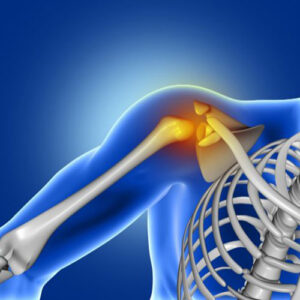
The rotator cuff is the hardest-working, most-often-injured part of the shoulder — and problems with it are the single most common reason people come to me with shoulder pain. The reassuring truth is that a rotator cuff problem is not automatically a surgical problem. But there's an important catch, and it's about timing. This is a companion to our main shoulder pain guide, focused on the rotator cuff and the calcium deposits that can form within it.
The rotator cuff is a group of four tendons that move and stabilise the shoulder. Problems range from tendinopathy (wear and inflammation) to partial and complete tears and calcific tendinitis (calcium deposits). Many are treated without surgery using ultrasound-guided injections, regenerative medicine (PRP), barbotage for calcium deposits, and physiotherapy. Treating a partial tear early is important — left alone it can become a complete tear that is harder to repair.
What Is the Rotator Cuff?
The rotator cuff is a group of four muscles and their tendons (supraspinatus, infraspinatus, teres minor and subscapularis) that wrap around the ball of the shoulder and keep it centred and stable while you lift and rotate your arm. In plain terms: think of them as four guy-ropes steadying a tent pole. When one frays, tears or becomes gritty with calcium, the whole shoulder becomes painful and weak, especially when you lift the arm.
The Spectrum of Rotator Cuff Problems
| Problem | What it is | Typical treatment approach |
|---|---|---|
| Tendinopathy / impingement | Wear, inflammation and pinching of the tendon | Physiotherapy, ultrasound-guided injection, PRP |
| Partial-thickness tear | The tendon is torn part-way through | Early PRP & rehabilitation to prevent progression |
| Full-thickness (complete) tear | The tendon is torn all the way through | Often surgical, especially if large or in active patients |
| Calcific tendinitis | Calcium deposits within the tendon | Ultrasound-guided barbotage, injection |
Symptoms of a rotator cuff problem
- Pain when lifting the arm, especially overhead or out to the side
- Weakness — difficulty lifting or holding the arm up
- Night pain, particularly when lying on the affected shoulder
- A catching or dead-arm feeling with certain movements
- Sudden, severe pain out of nowhere can suggest acute calcific tendinitis
Why You Shouldn't Delay: Partial Tears Can Become Complete Tears
This is the single most important message on this page. A rotator cuff tendon doesn't heal the way skin does — its blood supply is limited, and it's under load every time you use your arm. A small partial-thickness tear, left untreated and repeatedly stressed, can gradually enlarge and progress to a full-thickness (complete) tear. Once a tear becomes complete — and especially if the muscle begins to waste and retract — repair becomes much harder, and in some cases the tear becomes irreparable.
In plain terms: a small tear in a rope, under constant strain, tends to grow. Catching it early, while the tendon is still healthy enough to respond to regenerative treatment and rehabilitation, gives you the best chance of avoiding surgery altogether — and preserves the option of a good repair if you ever do need one.
A partial rotator cuff tear treated early may never become a complete tear. Waiting and hoping tends to narrow your options — and can turn a problem that was treatable without surgery into one that needs it.
Regenerative Treatment (PRP) for the Rotator Cuff
Regenerative medicine aims to support the tendon's own healing rather than just mask pain.
PRP (platelet-rich plasma) uses a small sample of your own blood, concentrated to its healing platelets, and injected precisely into the damaged tendon under ultrasound guidance. In plain terms: we deliver your body's own repair signals, concentrated, exactly to the frayed part of the tendon. Because it comes from you, there's no risk of rejection or allergy. PRP is most useful for tendinopathy and partial tears — the earlier stages, before a tear becomes large or complete — and it works best combined with a structured rehabilitation programme.
PRP helps most in tendinopathy and partial tears. It is not a reliable substitute for surgery in a large, complete tear with muscle retraction. Setting honest expectations is part of good care — and another reason to treat early, while regenerative options can still do their best work.
Barbotage for Calcific Tendinitis
Calcific tendinitis is a distinct and often dramatic rotator cuff problem, where calcium deposits build up within a tendon — sometimes causing sudden, intense, hard-to-bear pain.
Barbotage (ultrasound-guided percutaneous irrigation) is the key non-surgical treatment. In plain terms: the calcium deposit is like grit stuck inside the tendon. Using ultrasound to see the deposit precisely, we pass a fine needle into it and flush it with fluid, breaking up and washing out the calcium, then often follow with a small injection to calm the inflammation. Many patients get significant, sometimes rapid, relief without surgery.
1. Ultrasound targeting
The calcium deposit is located precisely with ultrasound and the area is numbed.
2. Irrigation & aspiration
The deposit is flushed with fluid and the softened calcium is washed out through the needle.
3. Same-day discharge
The procedure takes about 20–30 minutes and you go home the same day, followed by rehabilitation.
Other Treatments We Combine
Depending on the exact problem, we also use ultrasound-guided subacromial injections to settle inflammation and impingement, and a suprascapular nerve block to control pain and make rehabilitation more comfortable. Physiotherapy — particularly rotator cuff and scapular strengthening — is central to every plan, because a strong, well-balanced shoulder protects the tendon.
Why Our Approach Is Different
Every rotator cuff procedure we perform is ultrasound-guided and delivered to an international standard. That matters here more than almost anywhere in the body: ultrasound lets us see the tendon, the exact tear, the calcium deposit and the bursa in real time, so PRP goes into the right part of the tendon and barbotage targets the actual deposit — not an approximation. And every procedure is paired with structured rehabilitation, because tendon problems only truly resolve when the shoulder is rebuilt around them.
Ultrasound-Guided Precision
We see the tendon, tear and calcium deposit in real time, so treatment lands exactly where it's needed.
Treat Early, Protect Options
Addressing a partial tear early with regenerative treatment can prevent progression to a complete, harder-to-treat tear.
International Standards
PRP and barbotage techniques follow current international best practice.
Rehabilitation Built In
Every procedure is paired with rotator cuff and scapular strengthening, because that's what makes results last.
When Is Surgery Needed?
I'll always be honest about this. Surgery is generally the right call for a large or complete (full-thickness) tear, especially in an active person, for an acute traumatic tear, or when there's significant weakness and loss of function, or when a thorough non-surgical programme hasn't helped. In those situations, timely repair matters — which, again, is why not delaying is so important. For tendinopathy, partial tears and calcific tendinitis, non-surgical, ultrasound-guided treatment is usually the right place to start.
Doctor's advice
If your shoulder has been painful and weak for more than a few weeks, don't wait it out — get an ultrasound-based diagnosis. With rotator cuff tendons, time can quietly turn a treatable partial tear into a surgical complete tear. Treat early, treat precisely, and rebuild the shoulder with rehabilitation.
Key takeaways
- Rotator cuff problems range from tendinopathy to partial and complete tears and calcific tendinitis.
- Many are treated without surgery using ultrasound-guided PRP, barbotage and rehabilitation.
- PRP helps most in tendinopathy and partial tears; barbotage clears calcium deposits.
- Don't delay — a partial tear can progress to a complete, harder-to-treat tear.
- Large or complete tears, especially in active people, often need surgical repair.
- Rehabilitation is central to lasting recovery.
Summary
Rotator cuff pain is common and usually treatable without surgery — particularly when it's caught early. Ultrasound-guided regenerative treatment (PRP) supports healing in tendinopathy and partial tears, while barbotage clears the calcium deposits of calcific tendinitis, and both are paired with rehabilitation to rebuild a strong, stable shoulder. The one thing not to do is wait: a partial tear treated early may never become the complete tear that needs an operation.
Frequently Asked Questions About Rotator Cuff Tears
Can a rotator cuff tear heal without surgery?
Many tendinopathies and partial tears are managed successfully without surgery using ultrasound-guided injections, PRP and physiotherapy. Tendons heal slowly, so early treatment matters. Large complete tears often need repair.
Can a partial rotator cuff tear become complete?
Yes. Under ongoing load a partial tear can enlarge into a full-thickness tear that is harder to treat and can become irreparable — which is why early treatment is important.
What is barbotage?
An ultrasound-guided procedure that breaks up and washes out calcium deposits in calcific tendinitis of the rotator cuff, relieving pain without surgery.
Does PRP work for rotator cuff tears?
PRP can reduce pain and support healing in tendinopathy and partial tears by delivering concentrated growth factors from your own blood to the tendon. It works best with rehabilitation and before a tear becomes large.
How do I know if my rotator cuff is torn?
Pain lifting the arm, weakness, night pain and a catching sensation suggest a rotator cuff problem. Ultrasound or MRI confirms whether there's tendinopathy, a partial tear or a complete tear.
Is calcific tendinitis pain severe?
It can be — acute calcific tendinitis sometimes causes sudden, intense pain. Barbotage often brings significant, sometimes rapid, relief.
Is barbotage painful?
It's done under local anaesthesia with ultrasound guidance; most patients feel pressure rather than pain and go home the same day.
How long is recovery after PRP or barbotage?
Most people resume light activity within a day or two, with rehabilitation guiding a graded return. Tendon improvement builds over several weeks.
When does a rotator cuff tear need surgery?
For large or complete tears, acute traumatic tears, significant weakness, or when non-surgical treatment fails. Many smaller and partial tears are managed without surgery.
Where can I get non-surgical rotator cuff treatment in Delhi?
At PainClinix, Punjabi Bagh, interventional pain specialist Dr. Titiksha Goyal offers ultrasound-guided PRP, barbotage and rotator cuff treatment for patients across West Delhi and Delhi NCR.
Medical disclaimer
This article is for general education and does not replace a personal medical consultation. Rotator cuff problems should be diagnosed and treated after individual assessment and imaging. Please consult a qualified pain physician before making decisions about your care.