
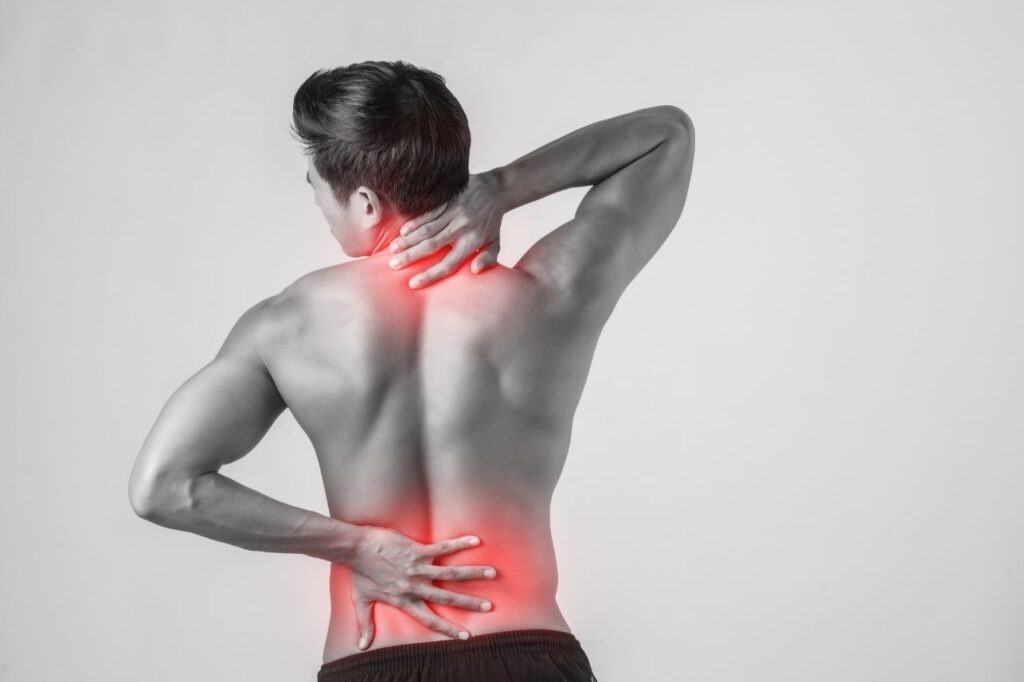
Low back pain is something almost everyone meets at some point — but for a great many people it stops being an occasional nuisance and becomes a daily companion that shapes how they sit, sleep, work and travel. Most patients who reach my clinic in Punjabi Bagh have already tried rest, painkillers, balms and a belt, and are quietly worried it means surgery. So let me begin where I begin with them: most low back pain is not dangerous, is not caused by anything sinister, and can be treated well without an operation — once we identify exactly where it is coming from.
Low back pain is a symptom, not a diagnosis. Its most common sources are the facet joints, discs (PIVD or slip disc, sometimes with sciatica), the sacroiliac joints and the back muscles. Most can be treated without surgery using physiotherapy, image-guided injections, facet and sacroiliac joint denervation RFA, transforaminal epidural steroid injections and regenerative medicine. The keys are an accurate diagnosis and not delaying — and recognising the few red-flag symptoms that need urgent care.
I'm Dr. Titiksha Goyal, an interventional pain specialist trained at AIIMS New Delhi. This is the guide I wish every back-pain patient could read before their first visit — so you understand your own spine, know which treatments genuinely work, and can tell the difference between ordinary back pain and the rare emergency that needs immediate attention.
In this series: Back & spine guides
Deeper, condition-specific reads for the common sources of low back and tailbone pain.
- Facet Joint Syndrome: Lasting Relief with Facet Denervation RFAHow the facet joints cause back pain, why a diagnostic block matters, and how facet RFA gives lasting relief without surgery.
- Slip Disc & Sciatica: Transforaminal Epidural InjectionWhy most slip discs don't need surgery — how an image-guided transforaminal epidural calms the nerve and speeds recovery.
- Spinal Stenosis: Leg Pain on Walking, Treated Without SurgeryRecognising neurogenic claudication, and how flexion-based rehab and epidural injections keep you walking.
- Sacroiliac Joint Pain: SI Joint Denervation RFAA commonly missed cause of one-sided low back and buttock pain — diagnosed with a block and treated with SI denervation RFA.
- Coccydynia (Tailbone Pain): Causes & Modern TreatmentFrom a wedge cushion and exercises to image-guided ganglion impar block and RFA — relief for the pain that makes sitting a misery.
- PRP & Regenerative MedicineWhere regenerative options fit for facet-joint and ligament-related back pain — how PRP works, and who genuinely benefits.
How Your Lower Back Actually Works (In Plain Terms)
Your lower back (the lumbar spine) is a stack of five vertebrae, cushioned between by soft discs that act as shock absorbers. At the back of each level, two small facet joints guide and limit movement, like hinges. At the base, the spine meets the pelvis at the two sacroiliac (SI) joints. Running through the middle is the spinal canal carrying the nerves, which exit at each level to supply the legs. Wrapping around all of this are the back muscles and ligaments.
In plain terms: think of the lower back as a flexible tower of blocks with cushions between them, hinges at the back, and electrical cables running through the middle down to your legs. Pain can come from a worn hinge (facet joint), a bulging cushion pressing on a cable (disc and sciatica), a strained base joint (SI joint), or the muscles that hold the tower steady. Working out which of these is the culprit is the whole basis of effective treatment.
Common Causes of Low Back Pain
When a patient says "my back hurts," an experienced pain physician is already sorting the possibilities. Here are the causes I see most often at our pain clinic in Punjabi Bagh:
Facet Joint Syndrome
Wear and irritation of the small facet joints, causing pain worse on bending backwards and standing. A very common source of chronic back pain. See our facet joint guide.
Disc Problems & Sciatica
A bulging or herniated disc (PIVD or slip disc) can press on a nerve, causing back pain and pain shooting down the leg (sciatica). See our slip disc & sciatica guide.
Sacroiliac Joint Dysfunction
Pain from the joint where the spine meets the pelvis, often felt low and to one side, worse with sitting or climbing stairs. See our sacroiliac joint guide.
Myofascial (Muscular) Pain
Tight, tender knots in the back muscles from posture, strain and stress — a very common and treatable source of back pain that doesn't show on scans.
Spinal Stenosis
Narrowing of the spinal canal, usually age-related, causing back and leg pain or heaviness that worsens on walking and eases on sitting or bending forward.
Cluneal Nerve Entrapment
Pinching of small nerves crossing the pelvic rim, causing pain over the upper buttock and low back — an often-missed cause that mimics other back problems.
Persistent Post-Surgical Pain
Ongoing back or leg pain after spine surgery (failed back surgery syndrome) — a genuine, treatable problem, not something you simply have to live with.
Other Causes
Osteoporotic fractures, inflammatory back conditions and, rarely, infection or tumour. These are why a careful assessment and the right red-flag screening matter.
These are very different problems needing very different treatments — a facet joint responds to denervation, a disc pressing on a nerve to a transforaminal injection, a muscular knot to something else entirely. This is exactly why I never treat "back pain" as one thing.
Symptoms and What They Mean
Your symptoms are clues. Often the pattern of your pain points to the source before any scan.
Common back symptoms — and what they often suggest
- Pain worse bending backwards, standing or twisting; better sitting — often facet joint syndrome.
- Pain shooting down the leg below the knee, with pins-and-needles — suggests a disc pressing on a nerve (sciatica).
- Pain low and to one side, worse sitting or climbing stairs — points to the sacroiliac joint.
- Back and leg heaviness on walking, relieved by sitting or leaning forward — suggests spinal stenosis.
- Tight, tender bands of muscle, pain with certain postures — myofascial pain.
- Pain over the upper buttock / pelvic rim — may be cluneal nerve entrapment.
Red Flags — When to Seek Urgent Medical Care
The vast majority of back pain is not an emergency. But a small number of symptoms signal a serious problem that needs immediate attention — please do not wait these out.
Seek emergency care immediately if you have
- Loss of bladder or bowel control, or difficulty passing urine — a possible cauda equina emergency.
- Numbness around the groin, buttocks or inner thighs (saddle area).
- Progressive weakness in one or both legs, or a foot that drops.
- Severe back pain after a significant injury or fall (possible fracture).
- Back pain with fever, unexplained weight loss, or a history of cancer.
These are the situations where surgery or urgent treatment can be genuinely necessary. If any apply, go to an emergency department now rather than booking a routine appointment.
Why You Shouldn't Delay Treatment
Ordinary back pain is rarely an emergency — but that doesn't mean waiting indefinitely is wise. Pain that persists sets up a cycle: you move less, the deep stabilising muscles of the spine weaken and waste, other structures take extra load, and the pain becomes more entrenched and harder to switch off. Nerve pain from a compressed nerve, left too long, can sometimes leave lasting numbness or weakness. And chronic pain has a way of pulling down sleep, mood and work. The point isn't to rush into procedures — it's that an accurate diagnosis and the right early treatment usually mean faster, more complete recovery than months of hoping it settles.
How We Find the Real Source of Your Back Pain
Patients often ask, a little anxiously, "What happens at the first visit? Will it hurt?" The consultation is a conversation and a careful examination — nothing invasive on day one. Here's what it involves:
1. Your story
When and how the pain started, exactly where it is, what eases or worsens it, whether it travels to the leg, and how it affects sleep and daily life. This alone points strongly to the source.
2. Hands-on examination
Movement testing, checking specific joints and nerves, assessing leg strength, sensation and reflexes to see whether a nerve is involved.
3. Targeted imaging
X-ray, MRI or CT when needed — but interpreted carefully, because scans in adults very often show age-related changes that are not the cause of pain.
4. Diagnostic blocks
This is a key strength of interventional pain medicine: a small, precise numbing injection to a suspected structure (a facet joint or the SI joint) can confirm it is the true pain generator before we commit to longer-lasting treatment.
Because scans so often mislead in back pain, this ability to test the actual pain source with a diagnostic block — rather than treating an MRI report — is one of the biggest advantages of seeing an interventional pain specialist.
The Step-by-Step Treatment Ladder
Good back care is conservative first and escalates only as needed. I think of it as a ladder — start on the lowest rung that can realistically help, and climb only when necessary.
Foundations for everyone
Active physiotherapy and core strengthening, staying gently active (prolonged bed rest is harmful), posture and ergonomic changes, weight management, and short-term medication where appropriate.
Image-guided injections & blocks
Diagnostic and therapeutic facet, SI joint and epidural (including transforaminal) injections to confirm the source and settle inflammation, plus regenerative options where suitable.
Radiofrequency ablation (denervation)
For confirmed facet or SI joint pain, calming the specific pain-carrying nerves gives lasting relief without weakening the back — an excellent way to avoid or delay surgery.
Surgical referral
For significant nerve compression with weakness, instability or red-flag problems, we coordinate a timely referral to a spine surgeon as part of a joined-up plan.
Interventional Procedures for Back Pain, in Simple Language
"Interventional" simply means targeted, image-guided treatments delivered precisely to the source of pain through a fine needle rather than an incision. You stay awake, we guide the needle using ultrasound and C-arm (live X-ray), and you go home the same day. Here are the main ones we use for the back.
Facet joint injections & medial branch blocks
Precise injections to the facet joints, or to the small medial branch nerves that supply them, to confirm and treat facet joint pain. A good response points the way to longer-lasting relief with denervation.
Facet joint denervation (radiofrequency ablation)
In plain terms: once we've proven the facet joints are the source, radiofrequency ablation gently quiets the tiny nerves carrying that pain, turning down the volume for many months — without affecting your back's strength. More in our facet joint guide.
Transforaminal epidural steroid injection
In plain terms: when a disc is pressing on a nerve and causing sciatica, we place anti-inflammatory medicine precisely around that irritated nerve root, calming the swelling and the leg pain — often helping people avoid disc surgery. More in our slip disc & sciatica guide.
Sacroiliac joint injection & denervation RFA
In plain terms: for pain coming from the SI joint, we can inject the joint to settle it, and if pain returns, calm its pain nerves with radiofrequency ablation for lasting relief. More in our sacroiliac joint guide.
Regenerative medicine (PRP)
Platelet-rich plasma uses concentrated healing factors from your own blood, injected precisely to support degenerated joints, discs or ligaments — useful in selected patients, particularly for facet joint and ligament-related pain.
Other procedures
Depending on the diagnosis, we also use caudal and interlaminar epidurals, nerve blocks (including cluneal nerve blocks), trigger point injections and dry needling for muscular pain, and, for complex persistent pain, advanced options such as spinal cord stimulation.
Deep Dives: The Three Big Back-Pain Diagnoses
Three conditions account for a large share of chronic low back pain, and each has a signature treatment worth understanding fully. I've written dedicated guides for each:
Facet Joint Syndrome
How the facet joints cause back pain and how facet denervation RFA gives lasting relief. Read the facet joint guide →
Slip Disc & Sciatica
Disc herniation, the leg pain it causes, and transforaminal epidural steroid injections. Read the slip disc & sciatica guide →
Sacroiliac Joint Pain
Why the SI joint hurts and how SI joint denervation RFA provides lasting relief. Read the sacroiliac joint guide →
Three More Causes Worth Knowing: Myofascial Pain, Cluneal Nerve Entrapment & Post-Surgical Pain
Myofascial pain syndrome of the back
A great deal of "back pain" comes not from the spine itself but from the muscles around it. In myofascial pain syndrome, the back and buttock muscles form tight bands with exquisitely tender knots called trigger points, which ache locally and refer pain to nearby areas. In plain terms: imagine a muscle with a permanent, painful cramp-knot. It won't show on an MRI, which is why it's so often missed — but it responds very well to trigger point injections and dry needling combined with posture correction, stretching and a graded strengthening programme.
Cluneal nerve entrapment
The cluneal nerves are small sensory nerves that cross the rim of the pelvis to supply the skin over the upper buttock. Where they cross a tight band of tissue, they can become pinched (entrapped), causing pain over the upper buttock and low back that is often mistaken for a disc or SI joint problem. In plain terms: a small nerve gets caught like a cable pinched under a clip. Recognising it matters, because it's treated very specifically — a precise, ultrasound-guided cluneal nerve block (and, in resistant cases, a release) can bring relief that no amount of disc treatment would, precisely because the disc was never the problem.
Persistent post-surgical pain (failed back surgery syndrome)
Some people continue to have back or leg pain after spine surgery — a frustrating situation sometimes labelled "failed back surgery syndrome." I want to be clear and reassuring: this is a real, recognised problem, and it does not mean nothing more can be done. After careful reassessment to find the current pain source — which may be scar tissue, an adjacent level, the SI joint or nerve-related pain — treatment options include targeted epidural and nerve procedures, radiofrequency treatment, and, for suitable patients with persistent nerve pain, spinal cord stimulation, alongside a structured rehabilitation programme. You do not simply have to live with it.
Why Choose Us: How We Do Back Treatment Differently
You have a choice about who treats your back, so here's an honest account of what sets our approach apart at PainClinix.
Every spine procedure we perform is image-guided — using ultrasound and C-arm (live X-ray) to an international standard — so the joint, nerve or disc target is seen and reached precisely, not approximated. We diagnose with precise diagnostic blocks rather than treating an MRI report, and every procedure is paired with a structured rehabilitation plan, because that's what makes relief last.
Image-Guided Precision
Ultrasound and C-arm guidance place every needle exactly on target — essential for safe, effective spine procedures.
We Diagnose, Not Guess
Precise diagnostic blocks confirm the true pain source before treatment — so we treat your pain, not just your scan.
International Standards
Techniques for facet and SI denervation, epidurals and regenerative treatment follow current international best practice.
Rehabilitation Built In
Every procedure is paired with core strengthening and movement retraining — because a procedure alone is only half the job.
Which Treatments Actually Work — and Which Are Myths
| Common belief | The honest picture |
|---|---|
| "Bed rest is the best treatment for back pain." | Myth. Prolonged bed rest weakens the back and slows recovery. Staying gently active is far better. |
| "A slip disc always needs surgery." | Not true. Most disc herniations improve without surgery; transforaminal injections and time help many avoid the operating theatre. |
| "My MRI looks bad, so my back is damaged beyond repair." | Misleading. Many people without any pain have "abnormal" MRIs. Pain must be correlated with examination, not read off a scan. |
| "Painkillers are the only option until surgery." | Myth. Between tablets and surgery lies a whole ladder of image-guided injections and denervation procedures. |
| "Radiofrequency ablation burns the nerves permanently / damages the back." | Overstated. It calms specific sensory pain nerves, which regenerate over time; it doesn't weaken the back, and can be repeated. |
| "Pain after spine surgery means nothing more can be done." | Wrong. Persistent post-surgical pain is treatable with reassessment and targeted procedures. |
Can Surgery Be Avoided? And When Is It Truly Needed?
For most low back pain — facet joint syndrome, SI joint pain, myofascial pain, and even the majority of disc herniations and sciatica — yes, surgery can usually be avoided with an accurate diagnosis and a well-run, image-guided, non-surgical plan. That is precisely the space an interventional pain specialist works in. But I'll always be honest when surgery is the right call: significant or progressive nerve compression with weakness, cauda equina symptoms, marked instability, or a red-flag cause genuinely need a surgeon, and timely referral matters. Honest medicine means knowing both when to intervene non-surgically and when to send you on.
Doctor's advice
Don't accept "learn to live with it," and don't rush into surgery either. The middle path — an accurate diagnosis with a diagnostic block, a precise image-guided procedure aimed at the real source, and committed rehabilitation — is where most back pain is genuinely solved. And never ignore the red-flag symptoms: those are the ones that truly can't wait.

Key takeaways
- Low back pain has many sources — facet joints, discs, SI joints and muscles — so accurate diagnosis comes before treatment.
- Most low back pain can be treated without surgery.
- Image-guided facet and SI denervation RFA, transforaminal epidurals and regenerative medicine are powerful, minimally invasive options.
- Diagnostic blocks let us treat the real pain source, not just an MRI report.
- Know the red flags — bladder/bowel changes, saddle numbness, progressive leg weakness — and seek emergency care if they occur.
- Rehabilitation makes relief last; a procedure alone is only half the job.
Summary
Low back pain rarely has a single cause, and it rarely has a single fix. Understanding whether your pain comes from the facet joints, a disc pressing on a nerve, the sacroiliac joint, the muscles, or an entrapped nerve is what makes treatment work. For the large majority of patients, a stepwise, image-guided, non-surgical plan — confirming the source with a diagnostic block, then settling it with a precise injection, denervation or regenerative treatment, always paired with rehabilitation — brings real, lasting relief and keeps surgery on the shelf. The two things that matter most are getting an accurate diagnosis and not ignoring the red flags.
Frequently Asked Questions About Low Back Pain
What is the most common cause of low back pain?
Most low back pain is mechanical, from the facet joints, discs, sacroiliac joints or back muscles. The specific cause must be identified because treatment differs for each.
Can low back pain be cured without surgery?
Most low back pain can be effectively treated — and often resolved — without surgery using physiotherapy, image-guided injections, facet and SI denervation RFA, transforaminal epidurals and regenerative medicine.
When is back pain an emergency?
Seek emergency care for loss of bladder or bowel control, numbness around the groin or inner thighs, progressive leg weakness, severe pain after major injury, or back pain with fever or a cancer history.
What kind of doctor treats back pain without surgery?
An interventional pain specialist diagnoses the source and offers image-guided injections and denervation procedures, coordinating a spine-surgery referral only if truly needed.
Is bed rest good for back pain?
No. Prolonged bed rest weakens the back and slows recovery. Staying gently active, guided by a specialist, is far better.
Does a slip disc always need surgery?
No. Most disc herniations improve without surgery. Transforaminal epidural steroid injections and time help many people avoid an operation. See our slip disc & sciatica guide.
What is facet joint denervation (RFA)?
A procedure using controlled heat to calm the medial branch nerves carrying pain from the facet joints, giving lasting relief for confirmed facet joint pain without weakening the back. See our facet joint guide.
What is a transforaminal epidural steroid injection?
An image-guided injection of anti-inflammatory medicine precisely around an irritated spinal nerve root, most often to relieve sciatica from a disc herniation.
What is sacroiliac joint pain?
Pain from the joint where the spine meets the pelvis, often felt low and to one side. It responds well to SI joint injection and, for lasting relief, denervation RFA. See our sacroiliac joint guide.
Why does my back pain go down my leg?
Leg pain (sciatica) usually means a nerve is being irritated or compressed, often by a disc. This pattern needs assessment, as nerve involvement changes the treatment.
Are steroid injections in the spine safe?
Image-guided epidural and joint steroid injections are widely used and safe when performed appropriately. As with any treatment, they're used judiciously, not endlessly repeated.
How long does radiofrequency ablation relief last for back pain?
It commonly lasts from several months up to a year or more. Because the treated nerves slowly regenerate, the procedure can be repeated safely if pain returns.
Is back pain treatment painful?
The consultation and examination aren't invasive. Procedures are done under local anaesthesia with image guidance; most patients feel pressure rather than pain and go home the same day.
How long do back procedures take?
Most image-guided spine procedures take about 20–40 minutes and are done on a day-care basis, so you go home the same day.
What is myofascial back pain?
Pain from tight, tender knots (trigger points) in the back muscles. It doesn't show on scans and responds well to trigger point injections, dry needling and posture correction.
What is cluneal nerve entrapment?
Pinching of small nerves crossing the pelvic rim, causing upper-buttock and low-back pain often mistaken for a disc or SI joint problem. It responds to a targeted cluneal nerve block.
Can back pain after spine surgery be treated?
Yes. Persistent post-surgical pain is a real, treatable problem. After reassessment, options include targeted procedures, radiofrequency treatment and, in selected cases, spinal cord stimulation.
Does an MRI always show the cause of back pain?
No. MRIs commonly show age-related changes that aren't the source of pain. Findings must be correlated with examination and, often, diagnostic blocks.
Can back pain be treated permanently?
Many causes can be brought under lasting control, especially when a procedure is combined with rehabilitation to address the underlying weakness and mechanics.
Where can I find a back pain specialist in West Delhi?
PainClinix in Punjabi Bagh, led by interventional pain specialist Dr. Titiksha Goyal, offers non-surgical back pain treatment including image-guided facet and SI denervation RFA, epidural injections and regenerative medicine, convenient for patients across West Delhi and Delhi NCR.
Medical disclaimer
This article is for general education and does not replace a personal medical consultation. Low back pain has many causes, and treatment must be individualised after examination and, where needed, imaging. Please consult a qualified pain physician or your doctor before making decisions about your care. If you have red-flag symptoms, seek urgent medical attention.