
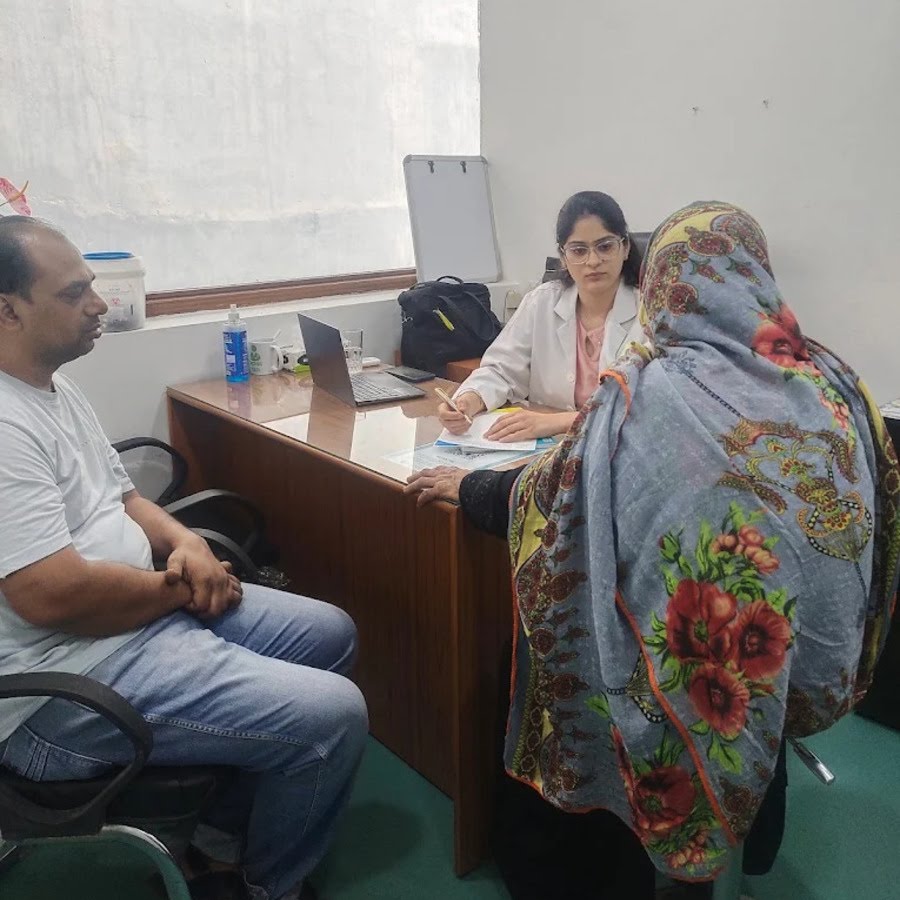
“Dard toh hota rehta hai.” “Umar ho gayi hai, ab yeh toh rahega.” “Ek painkiller le lo, theek ho jaoge.” If you have lived with back pain, knee pain, neck pain or nerve pain for months — or watched a parent do so — you have heard these lines. I hear them in my clinic every single day. And every day I want to tell people one simple thing: dard ka doctor alag hota hai — pain has its own doctor. That doctor is a pain specialist.
I'm Dr. Titiksha Goyal, an interventional pain physician trained at AIIMS, New Delhi. Most of the patients who walk into my clinic in Punjabi Bagh have already been in pain for a long time — often years — and have seen several doctors before they discover that a specialty dedicated to pain even exists. This article is my attempt to shorten that journey for you. It isn't about any single disease. It's about knowing whom to go to when pain refuses to leave.
What Is a Pain Specialist?
A pain specialist (pain physician) is a medical doctor who, after training in a base specialty, completes additional, dedicated training in pain medicine. Their job is to find out exactly where your pain is coming from and treat that source — using the right medicines, rehabilitation and, when needed, precise image-guided, non-surgical procedures such as nerve blocks, epidural injections and radiofrequency ablation. You should consider seeing one if pain has lasted more than about three months, keeps returning, needs painkillers most days, disturbs your sleep or work, or you've been told surgery is the only option.
Quick navigation
- Why this message matters • the doctor-hopping journey • why chronic pain is different
- Who is a pain specialist • pain specialist vs other doctors • which doctor for which pain • kis doctor ko dikhayen? • myths vs facts
- the painkiller trap • signs you need one • conditions treated • treatments
- first visit • can surgery be avoided? • red flags • choosing a pain doctor • FAQs
Why “Dard Ka Doctor Alag Hota Hai” Needs to Be Said
Pain is the most common reason people visit a doctor. And yet, in most of our homes, pain is treated as something to tolerate, not something to treat. We are taught that bearing pain is strength. Mothers ignore their knee pain because the household has to run. Working professionals swallow a tablet before a meeting. Elderly parents stop going for walks and quietly accept that “this is old age”.
The scale of the problem is enormous. The World Health Organization reports that low back pain is the leading cause of disability worldwide, and that musculoskeletal conditions — back pain, neck pain, osteoarthritis and others — are the leading contributor to disability globally. That means pain isn't a minor inconvenience; it is one of the biggest reasons people lose work, independence and quality of life.
Most of medicine has rightly organised itself around diseases and organs: the heart, the brain, the bones. But persistent pain often doesn't sit neatly inside one of those boxes. It can involve a joint, a nerve, a muscle and the nervous system's response to all of them at once. That's exactly why a separate specialty — pain medicine — grew up. In simple words: the orthopaedic doctor fixes bones, the neurologist treats nerve and brain diseases, and the pain specialist is the doctor whose entire focus is your pain.
The Journey Most Pain Patients Take (And Why It's So Long)
Here is a story I hear, in one form or another, almost every week. It's a composite — the details are blended from many patients, not one real person — but I suspect you'll recognise it.
A familiar story
A 52-year-old woman develops lower back pain that shoots into her leg. She takes painkillers from the chemist for a few weeks. It returns. The family doctor gives stronger tablets and a muscle relaxant. An X-ray shows “age-related changes”. An MRI shows a disc bulge. One opinion says “complete bed rest”; another says “you'll need an operation eventually”. She tries massage, a belt, oil, hot water bags and a few sessions of physiotherapy she can barely tolerate because of the pain. Two years later she is still in pain, sleeping badly, anxious about surgery — and taking painkillers almost every day.
When she finally sees a pain specialist, the examination points clearly to an irritated nerve root. After a targeted, image-guided procedure calms the nerve, she is finally able to do her exercises — and gradually gets her life back. The treatment itself was not magic. What changed was that someone focused on finding the exact source of her pain.
Not every story ends this way, and I'd never promise that it will. But the delay is the part I want you to notice. Months or years of suffering, repeated scans and daily painkillers are often avoidable, simply by reaching the right doctor sooner.
Why Chronic Pain Needs Its Own Doctor
Acute pain vs chronic pain
Acute pain is the body's alarm system. You twist your ankle, it hurts, it heals, the pain goes. It's useful — it protects the injured part.
Chronic pain is different. The International Association for the Study of Pain (IASP) defines chronic pain as pain that persists or recurs for longer than three months. By then, the alarm is often still ringing even though the original fire is small, or has long since gone out.
| Feature | Acute pain | Chronic pain |
|---|---|---|
| Duration | Days to weeks | More than 3 months, or keeps recurring |
| Purpose | A warning signal that protects an injury | Often no longer protective; the signal itself becomes the problem |
| Relationship to injury | Usually matches the injury | Often out of proportion to what scans show |
| Effect on life | Temporary disruption | Affects sleep, mood, work, relationships and fitness |
| Best approach | Treat the injury; pain settles | Find the pain generator, calm the nervous system, restore function |
When the nervous system turns up the volume
When pain goes on for a long time, the nerves and the spinal cord can become sensitised — a process doctors call central sensitisation. Think of it like a music system whose volume knob has got stuck on high: even a small signal comes out loud. This is why chronic pain can spread, flare with stress or poor sleep, and feel far worse than the scan suggests.
In plain terms: your pain is real. It is not “all in your head”. But long-lasting pain involves the whole pain system, not just the sore knee or back — and treating it well needs someone trained to look at the whole picture. The IASP itself describes pain as both a sensory and emotional experience, which is why good pain care also pays attention to sleep, stress and mood, not only to the X-ray.
Who Is a Pain Specialist? Qualifications and Training
What is a pain doctor called? A doctor who treats pain is called a pain specialist, pain physician, pain management doctor or, when they perform image-guided procedures, an interventional pain specialist. The specialty itself is called pain medicine or pain management, and the clinic is a pain clinic.
A pain specialist is a qualified medical doctor (MBBS) who first completes a postgraduate base specialty — very commonly anaesthesiology, though pain physicians also come from other backgrounds such as physical medicine and rehabilitation, orthopaedics or neurology — and then undertakes further dedicated training in pain medicine through fellowships and post-doctoral programmes.
That training covers:
- Pain diagnosis — the detailed examination skills to tell apart pain from a disc, a facet joint, the sacroiliac joint, a nerve, a muscle or a tendon.
- Pain pharmacology — which medicines work for which type of pain (nerve pain behaves very differently from joint pain), how to use them safely, and how to reduce them.
- Interventional procedures — placing medicine or energy at a precise target using ultrasound or fluoroscopy (live X-ray) guidance.
- Anatomy of nerves and the spine in fine detail, so procedures are accurate and safe.
- Cancer and palliative pain management, and complex pain syndromes.
- Working in a team with physiotherapists, surgeons, physicians, psychologists and oncologists.
For transparency: my own training includes an MD (Gold Medalist), the Fellowship in Interventional Pain Management (FIPM) at AIIMS, New Delhi, a Post-Doctoral Certificate Course (PDCC) in Pain Management at BHU, Varanasi, and DNB. You can read more about my background here. I mention it not to impress, but because you have every right to ask any doctor treating your pain about their training.
Pain Specialist vs Orthopaedic Doctor, Neurologist and Others
This is the question I'm asked most: “Doctor, I've already shown my pain to an orthopaedic — why do I need a pain specialist?” It's a fair question, and the answer is not that one doctor is better than another. Each specialist has a different focus, and the best care often involves more than one of them.
| Doctor / professional | Main focus | When they're the right first stop |
|---|---|---|
| Family physician / GP | Overall health; first assessment; common illnesses | New pain, general health issues, first-line advice |
| Orthopaedic surgeon | Bones, joints and ligaments; structural and surgical repair | Fractures, dislocations, major ligament tears, joint replacement, spinal instability |
| Neurologist | Medical diseases of brain, spinal cord and nerves | Stroke, seizures, Parkinson's, multiple sclerosis, unexplained weakness or neuropathy work-up |
| Neurosurgeon / spine surgeon | Surgery of the brain and spine | Spinal cord compression, progressive weakness, cauda equina syndrome, tumours |
| Rheumatologist | Autoimmune and inflammatory joint diseases | Rheumatoid arthritis, ankylosing spondylitis, lupus, gout — multiple swollen joints, morning stiffness |
| Physiatrist (PM&R doctor) | Physical medicine and rehabilitation — restoring function after injury, stroke or disability | Rehabilitation planning, disability, recovery after neurological or musculoskeletal injury |
| Physiotherapist | Movement, strength, posture and rehabilitation | Restoring function; a core part of almost every pain plan |
| Pain specialist | The pain itself — pinpointing the pain generator and treating it, surgery-sparing where possible | Pain lasting 3+ months, recurring pain, painkiller dependence, nerve pain, pain despite treatment, second opinion before surgery, cancer pain |
In simple words: if something is broken, unstable or needs to be surgically repaired, a surgeon is essential. If the diagnosis is an autoimmune or neurological disease, those specialists lead. But if your main problem is pain that isn't going away — and there is no emergency — a pain specialist is the doctor built for that job. Good pain specialists refer to surgeons when surgery is truly needed, and good surgeons refer to pain specialists when it isn't.
Which Doctor Should I See for Back Pain, Knee Pain, Neck Pain, Sciatica or Nerve Pain?
“Which doctor should I consult?” is one of the most searched questions about pain — and one of the most confusing. Here is a practical guide. The last column matters most: if any of those apply, go to that doctor or the emergency department first.
| Your pain | When a pain specialist is a good choice | See another doctor first / urgently if… |
|---|---|---|
| Back pain / lower back pain | Pain lasting over 6–12 weeks, recurring pain, facet or SI joint pain, pain despite physiotherapy, advised surgery without an emergency | Fever, cancer history, weight loss, a fall or fracture, bladder/bowel problems, leg weakness |
| Sciatica / leg pain from the back (nas dabna) | Slip disc or spinal stenosis with shooting leg pain that isn't settling — a targeted epidural often helps | Foot drop, worsening leg weakness, numbness in the saddle area, bladder/bowel changes (spine surgeon, urgently) |
| Neck pain / cervical pain | Cervical spondylosis, facet pain, arm pain from a pinched nerve, stiff neck and shoulders | Neck pain after an accident, hand clumsiness or difficulty walking, fever with a stiff neck |
| Knee pain / joint pain | Knee osteoarthritis, pain despite exercise and weight loss, wanting to delay or avoid replacement | A hot, very swollen joint with fever (possible infection); a locked or unstable knee after injury (orthopaedic); many swollen joints with morning stiffness (rheumatologist) |
| Shoulder pain | Frozen shoulder, impingement, arthritis pain limiting movement and sleep | Dislocation, a major fall, or sudden inability to lift the arm after an injury |
| Nerve pain (burning, tingling, electric shocks) | Pain after shingles, diabetic neuropathy, trigeminal neuralgia, trapped nerves | Sudden weakness, facial droop or slurred speech (emergency — possible stroke) |
| Headache / migraine | Chronic headaches not controlled by medicines, occipital neuralgia, headache arising from the neck | Sudden “worst ever” headache, or headache with fever, confusion, weakness or vision loss (emergency / neurologist) |
| Muscle pain / body pain | Myofascial trigger points, chronic neck-shoulder muscle pain | Widespread pain with fever, rash, joint swelling or weight loss (physician or rheumatologist first, to rule out a medical cause) |
| Heel pain / elbow pain | Plantar fasciitis, tennis or golfer's elbow not improving with rest and exercises | Pain after a clear injury with inability to bear weight |
| Cancer pain | Pain not controlled despite medicines, or side effects from high doses | New severe back pain or leg weakness in someone with cancer (urgent — possible spinal cord compression) |
In short: for pain that is long-lasting, recurring or not improving — without an emergency sign — a pain specialist is usually the right doctor.
Dard Ka Doctor Kaun Hota Hai? Kamar, Ghutne aur Gardan ke Dard ke Liye Kis Doctor Ko Dikhayen?
Bahut log Google par poochte hain: “dard ka doctor kaun hai?”, “kamar dard ke doctor ko kya kahate hain?”, “ghutno ke dard ka doctor kaun sa hota hai?” Yahan seedhe, saral jawab hain.
Dard ka doctor kaun hota hai? (दर्द का डॉक्टर कौन होता है?)
Dard ke doctor ko pain specialist ya pain management doctor kehte hain. Yeh MBBS aur MD ke baad khaas taur par dard ke ilaaj ki training (jaise AIIMS ki FIPM fellowship) lete hain. Inka kaam hai yeh pata lagana ki dard kahan se aa raha hai, aur jahan sambhav ho, bina operation ke uska sahi ilaaj karna.
Kamar dard ke liye kis doctor ko dikhayen?
Agar kamar dard 6–12 hafte se zyada ho gaya hai, baar-baar laut aata hai, ya roz painkiller leni padti hai, to pain specialist ko dikhayen. Lekin agar bukhar ho, peshab/latrine par control na rahe, pairon mein kamzori ho ya chot lagi ho, to turant emergency mein jaayen.
Ghutno ke dard ka doctor kaun sa hota hai?
Ghutne ke purane dard aur arthritis (gathiya) mein pain specialist bina operation ke ilaaj — exercise, sahi dawai aur ultrasound-guided injection — se madad kar sakte hain. Agar chot ke baad ghutna lock ho jaaye ya ladkhadaye, to orthopaedic doctor ko dikhayen.
Nas dabne (sciatica) ka doctor kaun hota hai?
Kamar se pair mein jaane wala dard, jhanjhanahat ya nas dabne ki takleef mein pain specialist targeted epidural injection ya nerve block se nas ki soojan kam kar sakte hain. Pair mein kamzori badh rahi ho to spine surgeon ko turant dikhayen.
Cervical ya gardan ke dard mein kis doctor ko dikhayen?
Cervical spondylosis, gardan-kandhe ka dard, ya haath mein jaane wala dard — in sab mein pain specialist achha vikalp hain. Haathon mein badhti kamzori ya chalne mein dikkat ho to neurologist/neurosurgeon ko turant dikhayen.
Chronic pain ka matlab kya hai? (Chronic pain meaning in Hindi)
Chronic pain yaani purana ya deerghkaalik dard (दीर्घकालिक दर्द) — aisa dard jo 3 mahine se zyada rahe ya baar-baar lautkar aaye. Iska ilaaj sirf painkiller se nahi, balki dard ki jadd dhoondhkar kiya jaata hai.
Pain clinic ka matlab kya hai?
Pain clinic woh clinic hai jahan khaas taur par dard ka ilaaj hota hai — dard ki sahi jaanch, dawai, exercise ki salah, aur zaroorat padne par image-guided (ultrasound/X-ray se dekhkar) injection, jo aksar day-care procedure hota hai aur mareez usi din ghar chala jaata hai.
Common Myths About Pain — and the Facts
A lot of suffering in our country comes not from lack of treatment, but from beliefs that stop people seeking it. Let's clear some of the most common ones.
| Myth | Fact |
|---|---|
| “Dard sehna chahiye” — you should just bear pain. | Persistent, untreated pain affects sleep, mood, weight, heart health and independence. Treating pain is not weakness; it's medicine. |
| “Umar ho gayi hai” — pain is normal in old age. | Some wear and tear is common, but pain that limits walking or sleep is not something to accept. Older adults often benefit greatly from treatment. |
| “A painkiller is the treatment.” | Painkillers temporarily reduce the signal; they rarely treat the source. Long-term daily use carries real risks. |
| “If the MRI is normal, the pain isn't real.” | Scans show structure, not pain. Muscles, small joints, ligaments and sensitised nerves often don't show clearly — and many people have scan “abnormalities” with no pain at all. |
| “Operation hi aakhri ilaaj hai” — surgery is the only real cure. | Many back, neck and knee problems improve without surgery. Surgery is valuable for specific situations, but it isn't the default answer for pain. |
| “Injection in the back causes paralysis.” | Serious nerve injury from properly performed, image-guided spinal procedures is rare. Guidance, sterile technique and training matter — ask about them. |
| “Pain injections are just steroids that damage the body.” | Many procedures use small, targeted doses — far less than long courses of tablets — and many don't use steroids at all (e.g., radiofrequency ablation, PRP, some nerve blocks). |
| “Complete bed rest will fix my back.” | For most back pain, prolonged bed rest slows recovery. Staying gently active, as guided, is usually better. |
| “Pain clinics only give temporary relief.” | The aim is lasting improvement: an accurate diagnosis, targeted treatment, and rehabilitation so the relief is used to rebuild strength and function. |
The Painkiller Trap: Why Tablets Alone Aren't the Answer
In India, many painkillers can be bought easily across the counter, and it's very common for people to take them for months without a doctor's review. I understand why — when you're hurting, you want relief now. But please know the risks of relying on them long-term:
- Anti-inflammatory painkillers (NSAIDs) — the common “pain and swelling” tablets — can cause acidity, stomach ulcers and bleeding, can affect the kidneys, and can raise blood pressure and strain the heart, especially in older adults and people with diabetes or kidney disease.
- Paracetamol is generally gentle at correct doses, but exceeding the safe daily dose (sometimes accidentally, because it's hidden inside combination products) can damage the liver.
- Stronger opioid-type painkillers can cause drowsiness, constipation, falls and dependence, and generally aren't a good long-term solution for most chronic musculoskeletal pain.
- Pain injections from unqualified providers — the “quick injection that works like magic” — sometimes contain repeated, undisclosed steroids. Always ask what is being injected, where, and why.
Perhaps the biggest risk is quieter: a painkiller can mask a problem that is getting worse, delaying the diagnosis. If you need a painkiller most days, that is not a medicine problem — it's a signal to see a specialist.
Please don't stop prescribed medicines suddenly on your own after reading this. A pain specialist's goal is often to reduce your tablet burden safely — and that is done step by step, with medical supervision.
Signs You Should See a Pain Specialist
Consider seeing a pain specialist if…
- Your pain has lasted more than 3 months, or keeps coming back.
- You need painkillers most days, or they've stopped working.
- Pain is disturbing your sleep, work, walking, or time with family.
- You have burning, electric, shooting or tingling pain — typical of nerve pain.
- Pain travels from the back into the leg, or from the neck into the arm.
- You've been told “surgery is the only option” and want to know whether non-surgical options exist.
- You've had surgery but the pain persists.
- Your scans are “normal” or “minor”, but the pain is not.
- You or a family member has cancer pain that is hard to control.
- Your physiotherapy is stuck because it hurts too much to exercise.
- You're elderly, diabetic, or have kidney, heart or stomach problems, and painkillers aren't safe for you long-term.
If even two or three of these apply to you, an evaluation is worthwhile. You don't have to wait for pain to become unbearable.
Conditions a Pain Specialist Commonly Treats
Pain medicine covers pain from almost any part of the body. Some of the conditions we see most often — each linked to a detailed guide:
| Area | Common conditions |
|---|---|
| Back & spine | Chronic low back pain, slip disc & sciatica, facet joint pain, spinal stenosis, sacroiliac joint pain, pain after spine surgery |
| Neck | Neck pain, cervical spondylosis, cervical radiculopathy (arm pain), myofascial & trapezius pain |
| Joints | Knee osteoarthritis, meniscus tears, frozen shoulder, shoulder impingement, hip arthritis |
| Tendons & sports | Tennis elbow, golfer's elbow, plantar fasciitis (heel pain) |
| Nerve pain | Trigeminal neuralgia, post-herpetic neuralgia (pain after shingles), diabetic neuropathy, carpal tunnel syndrome |
| Head & face | Chronic headaches, occipital neuralgia, facial pain |
| Pelvis & tailbone | Coccydynia (tailbone pain), chronic pelvic pain |
| Cancer & complex pain | Cancer pain, chronic pancreatitis and visceral pain, complex regional pain syndrome |
You can explore all of these on our What We Treat page.
What Does a Pain Specialist Actually Do?
People sometimes imagine a pain clinic as a place where you get “an injection” and leave. Good pain medicine is far more thoughtful than that. Here's the step-by-step way I approach almost every patient — a treatment ladder you climb only as far as you need to:
Find the pain generator
A detailed history and hands-on examination to identify which structure is producing the pain — disc, nerve root, facet joint, SI joint, muscle, tendon or the nervous system itself.
Rule out anything serious
Check for red flags — infection, fracture, tumour, nerve compression needing surgery — and order only the investigations that will actually change the plan.
Build the foundations
Clear explanation, a guided exercise and physiotherapy plan, posture and ergonomic advice, sleep, weight and activity pacing. These are not “extras”; they are the base of lasting relief.
Use the right medicines, wisely
Matching medicine to pain type (nerve-pain medicines work differently from anti-inflammatories), at the lowest effective dose, for a defined period — and reducing unnecessary tablets.
Targeted image-guided procedures, if needed
When pain blocks progress, precise procedures under ultrasound or fluoroscopy can calm an inflamed nerve, joint or tendon — sometimes first as a diagnostic block to confirm the source.
Longer-lasting options for selected patients
For confirmed sources, options such as radiofrequency ablation or regenerative treatments like PRP may offer longer relief in appropriately selected cases.
Refer to a surgeon when surgery is genuinely right
An honest pain specialist knows the limits of non-surgical care and refers early when the evidence points to surgery.
Common interventional pain procedures, explained simply
| Procedure | What it does, in plain words | Often used for |
|---|---|---|
| Epidural injection (e.g., transforaminal) | Places anti-inflammatory medicine right next to an irritated spinal nerve root to calm it down | Slip disc with sciatica or arm pain, spinal stenosis |
| Facet joint / medial branch block | Numbs the small joints of the spine or their nerves — also tells us whether they're the pain source | Chronic back or neck pain from spinal arthritis |
| Radiofrequency ablation (RFA) | Uses controlled heat to switch off the small nerve carrying pain signals from a joint, for longer-lasting relief | Facet joint pain, sacroiliac joint pain, knee arthritis (genicular nerves) |
| Peripheral nerve blocks | Targets a specific nerve that is causing or carrying pain | Headache (occipital), shoulder pain, knee pain, neuralgias |
| Hydrodilatation | Gently stretches a stiff, shrunken shoulder capsule with fluid | Frozen shoulder |
| PRP (platelet-rich plasma) | Uses concentrated platelets from your own blood to support healing | Selected tendon problems and early-to-moderate knee arthritis |
| Sympathetic & visceral nerve blocks | Interrupts pain pathways from internal organs | Cancer pain, chronic pancreatitis, some complex pain syndromes |
Most of these are day-care procedures, done under local anaesthetic, with you awake and comfortable, and you usually go home the same day. No large cuts, no stitches, no long hospital stay. Not every patient needs a procedure — many don't — and the right one depends entirely on your diagnosis. You can read more on our Treatments page.
Why image guidance matters
A “blind” injection relies on feeling for landmarks on the skin. An image-guided procedure uses ultrasound or fluoroscopy to see the target and the needle in real time. That means the medicine goes where it is meant to go, nearby nerves and blood vessels can be avoided, and the procedure is more precise and reproducible. Simply put: we don't guess where the needle is — we watch it. (More in our guide on why ultrasound-guided injections are more accurate.)
“Will it hurt?”
This is the most natural fear, and it deserves an honest answer. Most patients describe a procedure as a pinch and some pressure, similar to or a little more than a routine injection, because the skin is numbed first. Some soreness for a day or two afterwards is common. We go at your pace, explain each step, and you can talk to us throughout.
What Happens at Your First Visit to a Pain Specialist?
Knowing what to expect takes away much of the anxiety. A thorough first consultation generally looks like this:
Your story
Where the pain is, how it started, how long it has lasted, what makes it better or worse, how it affects sleep and work, and what you've already tried.
Examination
A physical, and where relevant neurological, examination — often the single most informative part of the visit.
Review of reports
Your X-rays, MRI, blood tests and prescriptions, interpreted alongside the examination (not instead of it).
Explanation
What is most likely causing your pain, explained in language you understand — including what is not wrong, which is often very reassuring.
A plan you agree with
A step-by-step plan, the options, their benefits and risks, and realistic expectations — with time for all your questions.
What to bring
- All previous MRI / X-ray / CT reports (and films or CDs if available)
- A list of every medicine you take, including painkillers bought without prescription
- Previous prescriptions and discharge summaries, especially of any surgery
- Blood reports if you have diabetes, kidney disease or take blood thinners
- A family member, if you'd like help remembering the discussion
Can a Pain Specialist Help You Avoid Surgery?
Often — but honestly, not always. Let me be balanced about this, because both extremes (“surgery is the only cure” and “you never need surgery”) do patients harm.
Many common pain problems improve without surgery. A large share of people with slip disc and sciatica recover with time, rehabilitation and, where needed, a targeted epidural injection. Much chronic back and neck pain comes from joints and soft tissues that respond to non-surgical care. Many people with knee arthritis manage well for years with exercise, weight management and injections — see our guide to alternatives to knee replacement.
But surgery is the right choice in specific situations, such as:
- Progressive weakness in a leg or arm, or foot drop
- Loss of bladder or bowel control, or numbness in the saddle area (a surgical emergency)
- Spinal instability, fractures or tumours compressing nerves
- Severe, end-stage joint damage with disabling pain despite all reasonable non-surgical treatment
A pain specialist's role is to give you the full picture. If you've been advised surgery and there is no emergency, seeking a pain specialist's opinion before deciding is sensible — and if surgery truly is your best option, a good pain specialist will say so clearly.
When a Pain Clinic Is Not the First Stop: Red Flags
Go to an emergency department / seek urgent care if pain comes with:
- Loss of bladder or bowel control, or numbness around the genitals/buttocks
- New or rapidly worsening weakness in the arms or legs
- Chest pain, pain spreading to the jaw or left arm, or breathlessness
- A sudden, severe “worst ever” headache, or headache with confusion, fever and stiff neck
- Back pain with fever, unexplained weight loss, or a history of cancer
- Pain after a significant fall or accident, especially in older adults or people with osteoporosis
- Severe abdominal pain with vomiting, or a rigid abdomen
These need emergency evaluation first. Pain specialists treat persistent pain — we are not a substitute for emergency care.
Pain Doesn't Look the Same for Everyone
Elderly parents
Older adults are the group most likely to be told “it's just age” — and the group most vulnerable to painkiller side effects on the kidneys, stomach and heart, and to falls from sedating medicines. Targeted, low-risk procedures can help them stay mobile and independent with fewer tablets. If your parent has stopped walking, climbing stairs or going out because of pain, please don't accept that as normal.
Women
In many families women put everyone else first and tolerate pain silently for years. Chronic back pain, knee pain, neck and shoulder pain, tailbone pain after childbirth and pelvic pain are common — and treatable. Taking care of your pain is taking care of your family.
Working professionals
Long hours at a desk, screens, commutes and stress drive a lot of neck, back and wrist pain. Early treatment, ergonomic changes and exercise stop an irritating ache from becoming a chronic problem that affects your career.
People living with cancer
Cancer pain can and should be controlled. Pain specialists work alongside oncologists and palliative care teams, adjusting medicines carefully and, for selected patients, performing nerve blocks that can meaningfully reduce pain and the need for high medicine doses. No one should have to “just bear” cancer pain. (Pain management and palliative care overlap but aren't identical: palliative care looks after overall comfort and quality of life in serious illness, while a pain specialist brings focused pain treatments, including procedures, to that team.)
People with diabetes
Burning, tingling feet from diabetic neuropathy are often dismissed or treated with ordinary painkillers that don't work well for nerve pain. The right nerve-pain approach, alongside good sugar control, can make a real difference.
How to Choose the Right Pain Specialist
Pain medicine is a specialty that should be practised by properly trained doctors. Some questions worth asking — of any doctor, including me:
- What is your training in pain medicine? Look for a recognised fellowship or post-doctoral qualification.
- What do you think is causing my pain? You deserve a diagnosis, not just a procedure.
- Are your procedures image-guided (ultrasound or fluoroscopy)?
- What exactly will be injected, and why?
- What are the risks, and what results are realistic? Be cautious of anyone who guarantees a cure.
- What else should I be doing — exercise, physiotherapy, lifestyle — alongside treatment?
- Would surgery ever be better for me? An honest doctor will discuss this openly.
Doctor's advice
If there's one thing I'd like every family to take from this article, it's this: pain that stays is not a life sentence, and it isn't something you must earn the right to treat by suffering long enough. Don't wait until you can't walk, sleep or work. Don't let a tablet quietly become a daily habit. And don't assume your only choices are “live with it” or “have an operation” — there is often a lot of space in between. Dard ka doctor alag hota hai. Please use that knowledge, for yourself and for the people you love.
Why Many Patients in West Delhi Choose PainClinix
PainClinix in Punjabi Bagh was set up as a dedicated pain management clinic — not a general clinic that also does injections — precisely because of the gap this article describes. What that means for you in practice:
Diagnosis First
Time spent finding your pain generator through a careful history and examination — before any treatment is suggested.
AIIMS-Trained Specialist
Consultations and procedures by Dr. Titiksha Goyal, with fellowship training in interventional pain management.
Image-Guided Precision
Ultrasound and fluoroscopy guidance so treatment is placed exactly where it's needed, as safely as possible.
Honest, Surgery-Sparing Advice
Non-surgical care where the evidence supports it — and a clear referral when surgery is genuinely the better option.
If you have been searching for a pain specialist near me or a pain clinic in Delhi: we see patients from Punjabi Bagh, Rajouri Garden, Paschim Vihar, Pitampura, Rohini, Janakpuri and across Delhi NCR.
Key takeaways
- Dard ka doctor alag hota hai — pain medicine is a dedicated specialty, and pain specialists are trained specifically to diagnose and treat persistent pain.
- Chronic pain (lasting more than 3 months) is different from acute pain; the nervous system itself can become sensitised.
- A pain specialist works alongside orthopaedic surgeons, neurologists, physicians and physiotherapists — not against them.
- Daily painkillers are a warning sign, not a treatment plan; long-term use carries real risks.
- Treatment starts with finding the pain generator, then foundations, wise medicines and, if needed, image-guided day-care procedures.
- Many people can avoid surgery — but not all; red flags need urgent care and some conditions need a surgeon.
- You don't need to wait until pain is unbearable to seek help.
Summary
Most of us know which doctor to see for a heart, a fever or a broken bone — but not for pain that just won't go away. As a result, millions of people spend months or years on painkillers, repeated scans and doctor-hopping. Pain medicine exists to change that. A pain specialist focuses on identifying exactly where your pain comes from and treating it with the least invasive effective approach — medicines used wisely, rehabilitation, and precise image-guided procedures when needed — while recognising when a surgeon or another specialist is the right person. If pain has become part of your daily life, the most important step is simply knowing this: there is a doctor for your pain.
Frequently Asked Questions
What is a pain specialist?
A medical doctor who, after a base specialty, completes dedicated training in pain medicine — focused on diagnosing where persistent pain comes from and treating it with medicines, rehabilitation and image-guided procedures.
What does “dard ka doctor alag hota hai” mean?
Hindi for “pain has its own doctor” — a reminder that long-lasting pain isn't something to just tolerate or suppress with tablets; there is a specialty dedicated to treating it.
When should I see a pain specialist?
If pain lasts more than about 3 months, keeps recurring, needs painkillers most days, disturbs sleep or work, hasn't improved with treatment, or you've been advised surgery and want non-surgical options assessed.
What's the difference between a pain specialist and an orthopaedic doctor?
The orthopaedic surgeon focuses on bones and joints and their structural and surgical repair; the pain specialist focuses on the pain itself and non-surgical, targeted treatment. They often work together.
What is a pain doctor called?
A pain specialist, pain physician, pain management doctor or interventional pain specialist. The specialty is pain medicine, and the clinic is a pain clinic.
Which doctor should I consult for back pain?
For back pain lasting beyond 6–12 weeks, recurring, or needing daily painkillers, a pain specialist. With fever, a fall, cancer history, leg weakness or bladder/bowel changes, seek urgent care first.
Which doctor is best for sciatica or nerve pain?
A pain specialist is well suited to sciatica, pain after shingles, diabetic neuropathy and neuralgias. Progressive weakness or sudden neurological symptoms need a spine surgeon or neurologist urgently.
Is a pain specialist an anaesthesiologist?
Many pain specialists start in anaesthesiology, but a pain specialist has additional dedicated training in pain medicine; others come from rehabilitation, orthopaedics or neurology.
Is a pain specialist the same as a neurologist?
No. Neurologists treat diseases of the brain, spinal cord and nerves; pain specialists treat persistent pain from any source and perform interventional procedures. They frequently collaborate on nerve pain.
What conditions does a pain specialist treat?
Back pain, slip disc and sciatica, neck pain, knee arthritis, frozen shoulder, tendon pain, nerve pain like trigeminal neuralgia and diabetic neuropathy, headaches, tailbone pain and cancer pain, among others.
Do pain specialists just give painkillers?
No — a good pain specialist usually aims to reduce your painkiller burden, using accurate diagnosis, targeted medicines, rehabilitation and precise procedures.
Do pain specialists do surgery?
Not open surgery. They perform minimally invasive, needle-based, usually day-care procedures under local anaesthetic and image guidance, and refer to surgeons when surgery is needed.
Can a pain specialist help me avoid surgery?
Often, yes — many back, neck and knee problems improve without surgery. But progressive weakness, bladder/bowel problems, instability or end-stage joint disease may need a surgeon.
Are pain injections safe?
When done by a trained specialist, for the right reason, with image guidance and sterile technique, they are generally safe and serious complications are uncommon. Risks should always be explained beforehand.
Can a back injection cause paralysis?
Serious nerve injury from properly performed, image-guided spinal procedures is rare. Ask your doctor about guidance, technique and the specific risks of your procedure.
Is it okay to take painkillers every day?
Not long-term without supervision. NSAIDs can harm the stomach, kidneys and blood pressure; too much paracetamol can harm the liver; opioid-type drugs can cause dependence.
Why do I have pain if my MRI is normal?
Scans show structure, not pain. Muscles, small joints, ligaments and sensitised nerves often don't show clearly — your pain is still real, and a careful examination is key.
Is chronic pain all in the mind?
No. Chronic pain is real; the nervous system can become sensitised and amplify pain. Stress and poor sleep can worsen it, which is why good care treats the whole person.
What happens at the first visit?
A detailed conversation, a physical and neurological examination, a review of your reports, a clear explanation of the likely cause, and a step-by-step plan discussed with you.
Do I need a referral?
Usually not for private clinics in India — you can book directly. Bring your scan reports, prescriptions and a list of all medicines.
Is pain just part of getting old?
Some wear and tear is common, but pain that limits walking, sleep or independence isn't something to accept. Older adults often benefit a lot from targeted treatment.
Will a pain procedure hurt?
The skin is numbed first; most people feel a pinch and pressure. Some soreness for a day or two is common. The procedure is explained step by step and done at your pace.
Will I need to be admitted to hospital?
Most interventional pain procedures are day-care — you usually go home the same day after a short period of observation.
Does a pain specialist treat cancer pain?
Yes, alongside oncologists and palliative care teams — with carefully adjusted medicines and, for selected patients, nerve blocks that can reduce pain and medicine doses.
How is a pain specialist different from a physiotherapist?
A physiotherapist restores movement and strength through exercise; a pain specialist is a doctor who diagnoses, prescribes and performs procedures. Procedures often make physiotherapy possible.
Will one procedure cure my pain permanently?
Sometimes relief is long-lasting, but no honest doctor can guarantee a permanent cure. Results depend on the diagnosis, and relief is best used to rebuild strength through rehabilitation.
Where can I see a pain specialist in West Delhi?
PainClinix in Punjabi Bagh is a dedicated pain clinic led by AIIMS-trained interventional pain specialist Dr. Titiksha Goyal, serving patients across West Delhi and Delhi NCR.
References & Further Reading
The information here reflects established medical understanding of pain and its management. For authoritative further reading:
- International Association for the Study of Pain (IASP) — Terminology, including the revised definition of pain as a sensory and emotional experience.
- International Association for the Study of Pain (IASP) — Definitions of Chronic Pain Syndromes (chronic pain as pain persisting or recurring for longer than 3 months).
- World Health Organization — Low back pain fact sheet.
- World Health Organization — Musculoskeletal health fact sheet.
- National Institute of Neurological Disorders and Stroke (NINDS, NIH) — Pain.
- National Center for Complementary and Integrative Health (NCCIH, NIH) — Chronic Pain: In Depth.
Written and reviewed by Dr. Titiksha Goyal, MD, Interventional Pain Specialist (FIPM, AIIMS New Delhi). Last reviewed September 2026. The patient story in this article is an illustrative composite, not an individual case. Outcomes of any treatment vary between individuals; this article does not promise specific results.
Medical disclaimer
This article is for general public awareness and education and cannot replace an individual medical assessment. Do not start, stop or change any medicine based on this article without consulting your doctor. If you have severe or sudden pain with any of the red-flag symptoms listed above, seek emergency medical care immediately.