
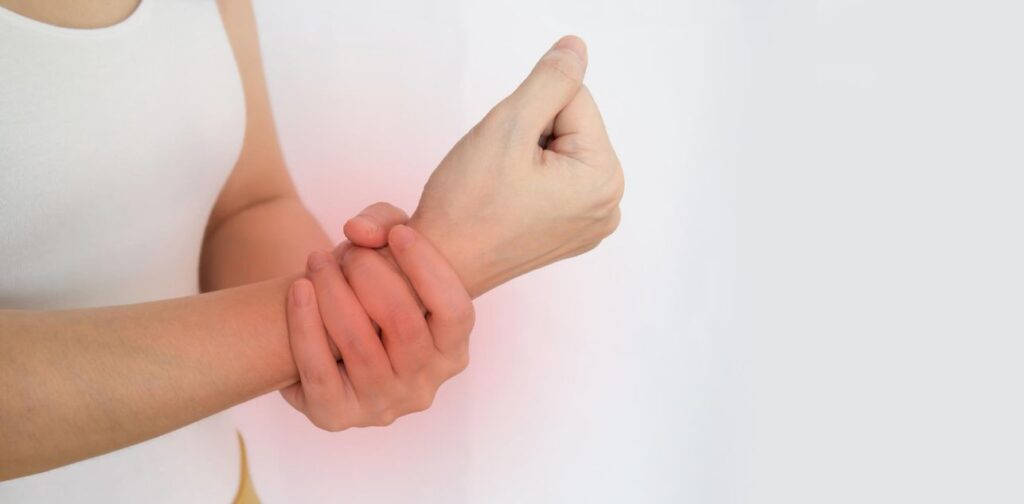
You grip a golf club, lift a heavy pan, or turn a doorknob — and a sharp pain flares on the inner side of your elbow. That's the signature of golfer's elbow, known medically as medial epicondylitis. Here's what surprises most people: you don't have to play golf to get it. Inner elbow pain from this condition is a tendon-overload problem, and its symptoms and treatment are the same whether it came from a golf swing, a barbell or a toolbox — with options ranging from rehabilitation to PRP. This guide covers what actually works, in plain, evidence-based language.
In fact, most people I see with golfer's elbow are not golfers. They're gym users and weightlifters, tennis and badminton players, manual workers, mechanics, carpenters, plumbers, cooks, musicians, office workers — anyone whose day involves repeated gripping or wrist movements. If that's you, read on.
What Is the Best Treatment for Golfer's Elbow?
There's no single best treatment for everyone. For most people, treatment begins with activity modification, load management and progressive rehabilitation — and that is enough. For persistent or chronic golfer's elbow that hasn't improved adequately with structured rehabilitation, interventional options such as PRP may be considered in appropriately selected patients. Corticosteroid injections can give faster short-term relief but aren't the automatic long-term choice for a degenerative tendon. And because inner-elbow pain can also come from the ulnar nerve, an accurate diagnosis comes first.
Quick navigation
What Is Golfer's Elbow?
Golfer's elbow is a painful condition of the tendons on the inner side of your elbow. The medical name is medial epicondylitis — the "medial epicondyle" is the bony bump on the inside of the elbow, and "-itis" means inflammation.
But as with tennis elbow, the "-itis" is a little misleading. In long-standing cases the tendon shows degeneration and failed healing — a tendinopathy — more than active inflammation. That matters, because it shapes which treatments make sense.
The tendons involved are the common flexor-pronator tendon — where several forearm muscles (including the pronator teres and flexor carpi radialis, with the palmaris longus, flexor carpi ulnaris and others) anchor to the bone. These muscles bend your wrist and turn your forearm inward, and they work hard whenever you grip. So every firm grip tugs on that sore tendon — which is exactly why gripping hurts.
What Does Golfer's Elbow Feel Like?
Common symptoms of golfer's elbow
- Pain and tenderness over the inner elbow (the medial epicondyle)
- Pain when gripping, or when the grip is firm
- Pain on bending the wrist down (flexion) or turning the forearm inward (pronation), especially against resistance
- Pain lifting objects, swinging a golf club, or during gym exercises
- Reduced grip strength, and aching that can radiate into the forearm
When it might be something else: tingling or numbness in the ring and little fingers, hand weakness, or pain that spreads from the neck are not typical of the tendon problem alone — they point toward the ulnar nerve or another cause, and deserve a proper assessment (more below).
Why Does the Inside of My Elbow Hurt?
An important truth: not all inner-elbow pain is golfer's elbow. The medial side of the elbow is a busy neighbourhood, and getting the diagnosis right changes the treatment. The main causes:
| Cause | How it typically presents |
|---|---|
| Golfer's elbow (medial epicondylitis) | Pain and tenderness right over the inner bony bump, worse with gripping and wrist flexion/pronation. |
| Ulnar neuropathy / cubital tunnel syndrome | Tingling or numbness in the ring and little fingers, worse with the elbow bent; sometimes hand weakness. The nerve runs just behind the inner elbow. |
| Flexor-pronator strain | A more acute muscle-tendon strain after a specific overload, rather than the gradual build-up of tendinopathy. |
| UCL (ulnar collateral ligament) injury | Inner-elbow pain and instability in throwing athletes; a ligament rather than tendon problem. |
| Cervical radiculopathy (neck) | Pain referred from a pinched nerve in the neck, often with neck symptoms or tingling down the arm. |
| Elbow osteoarthritis / trauma | Joint pain, stiffness or a history of injury, rather than focal tendon tenderness. |
This is why an examination — including checking the ulnar nerve — comes before any injection.
What Causes Golfer's Elbow?
Golfer's elbow is fundamentally an overload problem: the flexor-pronator tendons are repeatedly asked to do more than they can handle, without enough recovery, so they break down faster than they repair. The concept that matters is simple — repetitive tendon loading that exceeds the tendon's capacity to adapt. Common contributors:
- Repetitive gripping, wrist flexion and forearm pronation — the core mechanism.
- Golf and racquet sports, often with technique or equipment factors.
- Weight training and heavy gym work.
- Manual and occupational overuse — tools, assembly, cooking, trades.
- A sudden increase in training, poor technique, or inadequate recovery.
Who Gets Golfer's Elbow?
It's most common in adults doing repetitive hand and forearm work, including golfers, tennis and badminton players, gym users and weightlifters, manual workers, carpenters, plumbers, mechanics, cooks, musicians, and anyone with repetitive gripping. Playing golf is not required — the name just reflects one classic trigger.
Golfer's Elbow vs Tennis Elbow
These two are mirror images — the same kind of overuse tendinopathy, on opposite sides of the elbow. Telling them apart is usually straightforward:
| Feature | Golfer's elbow | Tennis elbow |
|---|---|---|
| Medical term | Medial epicondylitis | Lateral epicondylitis |
| Pain location | Inner elbow | Outer elbow |
| Main tendon region | Common flexor-pronator tendon | Common extensor tendon |
| Provoking movement | Wrist flexion & forearm pronation | Wrist extension |
| Grip pain | Common | Common |
| Nerve overlap | May coexist with ulnar neuropathy | May overlap with radial tunnel symptoms |
Tennis elbow is the more common of the two. If you want the outer-elbow version, see our tennis elbow guide.
How Is Golfer's Elbow Diagnosed?
Golfer's elbow is mainly a clinical diagnosis — from your story and a hands-on examination, usually without a scan. We check:
- Where it's tender — classically right over the medial epicondyle.
- Resisted wrist flexion and resisted forearm pronation — these reproduce the pain.
- Grip strength, which is often weaker and painful.
- The ulnar nerve and, where relevant, the neck — because both can mimic or accompany the tendon problem.
Ultrasound for golfer's elbow
Musculoskeletal ultrasound is a painless, radiation-free way to look at the tendon directly. It can show tendon thickening, altered echotexture, hypoechoic (degenerated) areas, small tears, abnormal blood flow (neovascularity) and changes at the bone attachment (enthesopathy) — and it guides injections in real time. Imaging isn't always necessary, but it's especially useful when a procedure like PRP is being considered.
MRI
MRI isn't routine. It's reserved for an atypical presentation, a suspected significant tear, an unclear diagnosis, symptoms that don't settle, surgical planning, or when an associated ligament problem is suspected.
Golfer's Elbow Treatment
Think of treatment as a ladder — start with the foundations, and climb only if you need to.
1. Activity modification & load management
Reduce the aggravating loads for a while and adjust technique or equipment — but don't rest completely. Total inactivity tends to weaken the tendon; the goal is to modify load, not stop moving.
2. Rehabilitation & physiotherapy (the cornerstone)
This is where most recovery happens. A good programme uses progressive tendon loading — gradually and safely challenging the tendon so it rebuilds — typically including isometric holds, eccentric and progressive-resistance wrist-flexor work, forearm pronation/supination strengthening, grip work, and a graded return to activity. Passive treatments (heat, massage) may feel nice but shouldn't be the main plan — loading the tendon is what changes it.
3. Bracing
A counterforce brace (a strap just below the elbow) or a wrist splint can offload the tendon and ease symptoms during aggravating activities. A helper alongside rehab, not a cure.
4. Medication
Topical or oral NSAIDs and simple analgesics can ease pain in the short term, but they're primarily symptom relief — they don't fix the underlying tendinopathy and aren't a long-term solution.
5. Interventional treatment
If good conservative care hasn't been enough, we consider PRP, shockwave therapy, and — more selectively — corticosteroid injection. Which one, and when, should be individualised. The next sections cover these honestly.
PRP for Golfer's Elbow: Does It Work?
Platelet-rich plasma (PRP) is a treatment made from your own blood. A small sample is spun in a centrifuge to concentrate the platelets, which are rich in growth factors, and this concentrate is injected into the abnormal part of the tendon. It's a biological treatment — the aim is to stimulate the tendon's own repair rather than just mask pain. Because it's from you, there's no risk of rejection or allergy.
Because tendon problems are degenerative, PRP works slowly: expect some early soreness, then gradual improvement over weeks, continuing over months — and it works best paired with rehabilitation, not instead of it.
For persistent or chronic golfer's elbow that hasn't responded to structured conservative care, PRP is a promising and commonly considered biological option. But here's the honest caveat most pages skip: the direct evidence for PRP in medial epicondylitis is more limited and less consistent than the evidence for tennis elbow (lateral epicondylitis), where most of the high-quality trials have been done. It's reasonable not to simply transfer the tennis-elbow findings across. So PRP for golfer's elbow is offered thoughtfully, in selected patients, with realistic expectations — not as a guaranteed cure.
PRP vs Steroid Injection for Golfer's Elbow
Both are injections, but they do different jobs — and neither replaces rehabilitation.
| Factor | PRP | Corticosteroid |
|---|---|---|
| Initial pain relief | Usually slower | Often faster |
| Longer-term outcome | Potentially favourable | Benefits may diminish |
| Purpose | Longer-term tendon-recovery strategy | Short-term symptom relief |
| Repeated use | Not automatically required | Repeated injections need caution |
| Rehabilitation | Important | Important |
A corticosteroid injection can be attractive when rapid short-term relief matters, but it isn't the automatic long-term choice for a degenerative tendon, and repeated steroid injections should not be given casually. This isn't about steroids being "bad" — it's about matching the tool to the job.
Is PRP the Best Treatment for Golfer's Elbow?
There is no single best treatment for every patient. That said, for appropriately selected patients with persistent or chronic golfer's elbow despite a structured rehabilitation programme, PRP can be considered a leading non-surgical interventional option. The right choice depends on your symptom duration and severity, the tendon findings, your rehabilitation history, your activity demands and goals, and what you've already tried — which is exactly why an individual assessment beats a one-size-fits-all answer.
Why Choose Ultrasound-Guided PRP for Golfer's Elbow?
Where you place an injection matters as much as what you inject. Elbow anatomy varies, the abnormal part of the tendon is often focal, and the ulnar nerve sits close by on the inner elbow. Doing PRP under ultrasound lets us visualise the flexor-pronator tendon, identify the abnormal area, confirm accurate placement, see and avoid nearby structures, and tailor the treatment to the actual pathology.
As a medically defensible way to put it: ultrasound guidance allows the clinician to visualise the affected tendon and target the relevant abnormal area rather than relying solely on surface anatomical landmarks. It doesn't automatically guarantee a better clinical outcome in every study — what it reliably offers is greater precision, better visualisation, added safety and a more reproducible technique, which matter most for a biologic like PRP.
What Happens During PRP Treatment?
1–3. Assessment & targeting
Clinical evaluation, ultrasound where indicated, and identification of the abnormal tendon area.
4–6. PRP & injection
A small blood sample is taken and spun to prepare the PRP, which is injected under ultrasound guidance into the target.
7–9. Aftercare & follow-up
Post-procedure advice, a guided rehabilitation progression, and a follow-up review.
Is PRP painful? There's mild discomfort from the blood draw and injection, and soreness at the elbow for a few days afterward is normal as healing begins; it's usually manageable and settles. How long to work? Not instantly — improvement builds over weeks, with tendon recovery over months, and timelines vary. How many injections? There's no universal number; many plans start with one, with more considered based on response.
Golfer's Elbow Exercises
Exercise is the backbone of recovery. These are examples, not a rigid prescription — progress them according to your symptoms, ideally with guidance, and don't push into sharp pain:
- Wrist-flexor isometric hold — gently hold the wrist in a bent-down position against light resistance without pain; good early on.
- Eccentric wrist flexion — with the palm up and a light weight, lower the wrist slowly, using the other hand to help it back up.
- Progressive resistance — increase load gradually as comfort allows.
- Forearm pronation/supination — slowly rotate the forearm holding a light weight or hammer.
- Grip strengthening — gentle squeezes, progressing over time, plus a graded return to sport-specific loading.
A word of caution
Persistent or worsening pain, significant grip weakness, symptoms after trauma, or any numbness or tingling in the hand should be assessed by a qualified clinician rather than pushed through.
Can I Play Golf With Golfer's Elbow?
It depends on how severe the symptoms are. During a painful phase, it's sensible to modify or reduce play rather than repeatedly provoke severe pain — while continuing your rehabilitation. It's worth reviewing swing mechanics and grip/equipment, and returning progressively rather than all at once. Most people get back to golf as the tendon settles.
How Long Does Golfer's Elbow Take to Heal?
Recovery is genuinely variable. Mild cases may improve over weeks with load management and rehabilitation; chronic cases can take several months or longer, because tendon adaptation is gradual. The single biggest factor in a good result is sticking with the exercises. Symptoms that persist despite a real effort deserve reassessment — and it's better to avoid a falsely precise "you'll be fine in X weeks" promise, because tendons don't read the calendar.
Can Golfer's Elbow Be Treated Without Surgery? When Is Surgery Needed?
Yes — the great majority of people improve without surgery, through activity modification, progressive rehabilitation, strengthening, load management and, where needed, interventional treatment such as PRP. Surgery is not first-line and most patients never need it.
It's considered only for a small minority: persistent, significant symptoms and functional limitation despite well-conducted non-operative treatment over many months, with a confirmed diagnosis, once reasonable conservative and interventional options have been tried. When the ulnar nerve is involved, surgery may also address that. Reserved for that select group, it can help — it's simply the end of the road, not the start.
Golfer's Elbow and Ulnar Nerve Symptoms
This deserves its own section, because it's the thing most often missed. The ulnar nerve runs through a tunnel (the cubital tunnel) right behind the inner elbow — the same region as the golfer's-elbow tendon. So inner-elbow pain can coexist with, or actually be caused by, ulnar nerve irritation (cubital tunnel syndrome).
Warning symptoms that point to the nerve rather than the tendon alone:
- Tingling or numbness in the ring and little fingers
- Hand weakness, clumsiness, or dropping objects
- Symptoms that are worse with the elbow bent for a while (on the phone, or asleep)
If any of these are present, the problem needs a neurological assessment — not just treatment of the tendon. Treating everything as "golfer's elbow" when the nerve is the real driver is a recipe for disappointment, which is why we check the nerve as part of the exam.
When Should You See a Specialist?
It's worth seeking specialist evaluation if you have persistent or worsening pain, significant grip weakness, pain interfering with work or sport, symptoms despite a genuine rehabilitation effort, recurrent symptoms, a suspected tendon tear, pain after trauma, or any numbness or tingling. A good assessment confirms the diagnosis, rules out the mimics (especially the ulnar nerve), and matches treatment to your stage.
What Does the Evidence Say About Golfer's Elbow Treatment?
- Rehabilitation and load management are the well-supported foundation, and golfer's elbow is frequently self-limiting over time.
- Corticosteroid injection tends to help in the short term but with waning benefit and higher recurrence in tendinopathy generally, so it's used selectively rather than repeatedly.
- PRP is a reasonable option for chronic cases — but here the honesty matters: most of the high-quality PRP tendinopathy trials studied tennis elbow (lateral epicondylitis), and the direct evidence in medial epicondylitis is more limited and less consistent. We shouldn't simply transfer the lateral-epicondylitis results across without saying so.
- The bottom line: the science supports a measured, patient-selected use of PRP for persistent golfer's elbow, alongside rehabilitation — not a guaranteed cure, and not the same evidence base as tennis elbow.
Summary
Golfer's elbow is a tendon disorder causing pain on the inner side of the elbow — and it's not limited to golfers. Most people are managed well without surgery, through load modification and progressive rehabilitation. For persistent or chronic cases that don't respond adequately, PRP may be considered in appropriately selected patients, with honest expectations and the recognition that the medial-epicondylitis evidence is thinner than for tennis elbow. Above all, an accurate diagnosis is essential — because conditions like ulnar nerve entrapment can cause very similar inner-elbow symptoms.
Frequently Asked Questions About Golfer's Elbow
What is golfer's elbow?
A painful tendon problem (medial epicondylitis) on the inner elbow, affecting the common flexor-pronator tendon. It's usually a degenerative overload tendinopathy, and most people who get it have never played golf.
What causes golfer's elbow?
Repetitive overload of the forearm flexor-pronator tendons from gripping, wrist flexion and forearm pronation — golf, racquet sports, weights, manual work and tools, often after a sudden increase in activity.
What are the symptoms of golfer's elbow?
Pain and tenderness on the inner elbow, worse with gripping, lifting, bending the wrist down or turning the forearm, sometimes radiating into the forearm with reduced grip strength.
Why does the inside of my elbow hurt?
Most often golfer's elbow, but it can also be ulnar nerve irritation (cubital tunnel), a flexor-pronator strain, a ligament (UCL) problem, elbow arthritis, or referred neck pain — so diagnosis matters.
How is golfer's elbow diagnosed?
Clinically — tenderness over the medial epicondyle and pain on resisted wrist flexion and pronation, plus a check of the ulnar nerve. Ultrasound confirms and guides treatment; MRI is for unclear cases.
What is the best treatment for golfer's elbow?
There's no single best. Activity modification and progressive rehabilitation are the foundation. For chronic cases that fail conservative care, PRP may be considered in selected patients.
Can golfer's elbow heal on its own?
Often yes — it's frequently self-limiting over months with load management and rehab, though recovery can be slow and symptoms can recur. Persistent pain or any numbness should be assessed.
What exercises help golfer's elbow?
Progressive wrist-flexor and forearm strengthening — isometric holds, eccentric wrist flexion, progressive resistance, grip and pronation/supination work — advanced according to symptoms.
Does PRP work for golfer's elbow?
In selected patients with persistent symptoms it may reduce pain and support recovery, but the direct evidence in medial epicondylitis is more limited than for tennis elbow. It's used thoughtfully, with rehab.
Is PRP better than a steroid injection?
Steroid works faster short-term but fades and needs caution if repeated; PRP acts slower and aims at longer-term recovery. For chronic tendinopathy PRP is generally favoured, though medial-elbow evidence is thinner.
Is PRP painful?
There's some discomfort from the blood draw and injection, and soreness for a few days afterward as healing begins. It's usually manageable and settles; experiences vary.
How long does PRP take to work?
Not instantly. Improvement usually develops gradually over several weeks, with tendon recovery continuing over months. Timelines vary.
How many PRP injections are needed?
No universal number. Many plans start with one injection; more may be considered depending on response and tendon findings.
Can I play golf with golfer's elbow?
During a painful phase, modify or reduce play rather than provoke severe pain, keep up rehab, review technique and equipment, and return progressively.
Is golfer's elbow the same as tennis elbow?
No — golfer's elbow is on the inner elbow (wrist flexion/pronation) and tennis elbow on the outer elbow (wrist extension). Both are overuse tendinopathies of different tendons.
Can golfer's elbow cause numbness?
The tendon problem causes pain, not numbness. But the nearby ulnar nerve can be irritated too — tingling in the ring and little fingers suggests nerve involvement needing assessment.
When does golfer's elbow need surgery?
Rarely — only for persistent, significant symptoms despite thorough non-surgical care over months, with the diagnosis confirmed, sometimes with ulnar nerve decompression.
Can golfer's elbow be treated without surgery?
Yes — the great majority recover without surgery through rehabilitation, load management and, where needed, PRP. Surgery is reserved for a small minority.
References & Clinical Guidelines
The recommendations here are consistent with current evidence, and we've kept the uncertainties — especially around PRP in medial epicondylitis — visible. For further, authoritative reading:
- American Academy of Orthopaedic Surgeons (AAOS) — OrthoInfo. Tennis Elbow (Lateral Epicondylitis) — the AAOS patient resource on epicondylitis; golfer's elbow is the medial-side form of the same overuse tendinopathy.
- StatPearls (NCBI Bookshelf) — Medial Epicondylitis: a peer-reviewed clinical overview of golfer's elbow.
- Cochrane Database of Systematic Reviews (cochranelibrary.com) — reviews of interventions for elbow tendinopathy and platelet-rich therapies.
- Peer-reviewed systematic reviews, meta-analyses and randomized trials on PRP for epicondylitis (PubMed-indexed) — noting that most high-quality data concern lateral (tennis) elbow, with more limited direct evidence in medial (golfer's) elbow.
Reviewed by Dr. Titiksha Goyal, MD, Interventional Pain Specialist (AIIMS New Delhi). Last reviewed July 2026. This page is reviewed and updated periodically to reflect current evidence. PRP outcomes vary with patient selection, preparation and technique; this article does not promise specific results.
Medical disclaimer
This article is for general education and cannot replace an individualized clinical assessment. Inner-elbow pain has several possible causes — including ulnar nerve entrapment — and should be diagnosed and treated after a personal evaluation and, where needed, imaging. Please consult a qualified pain physician, orthopaedic specialist or physiotherapist before making decisions about your care. If you have significant weakness, numbness, or pain after an injury, seek prompt medical attention.